Broom Tree Inn

Have you ever achieved that long awaited goal—graduated from college, scored that promotion, bought your dream house, or celebrated a major victory—only to wake up next day feeling empty or exhausted? One moment you’re celebrating, and the next you’re wondering why your heart feels heavy. Elijah, one of the greatest prophets, walked through something very similar.

1 Kings 19:3-7 – Elijah was afraid and ran for his life. When he came to Beersheba …while he himself went a day’s journey into the wilderness. He came to a broom bush, sat down under it, and prayed that he might die. “I have had enough, Lord,” he said. “Take my life; I am no better than my ancestors.” Then he lay down under the bush and fell asleep.

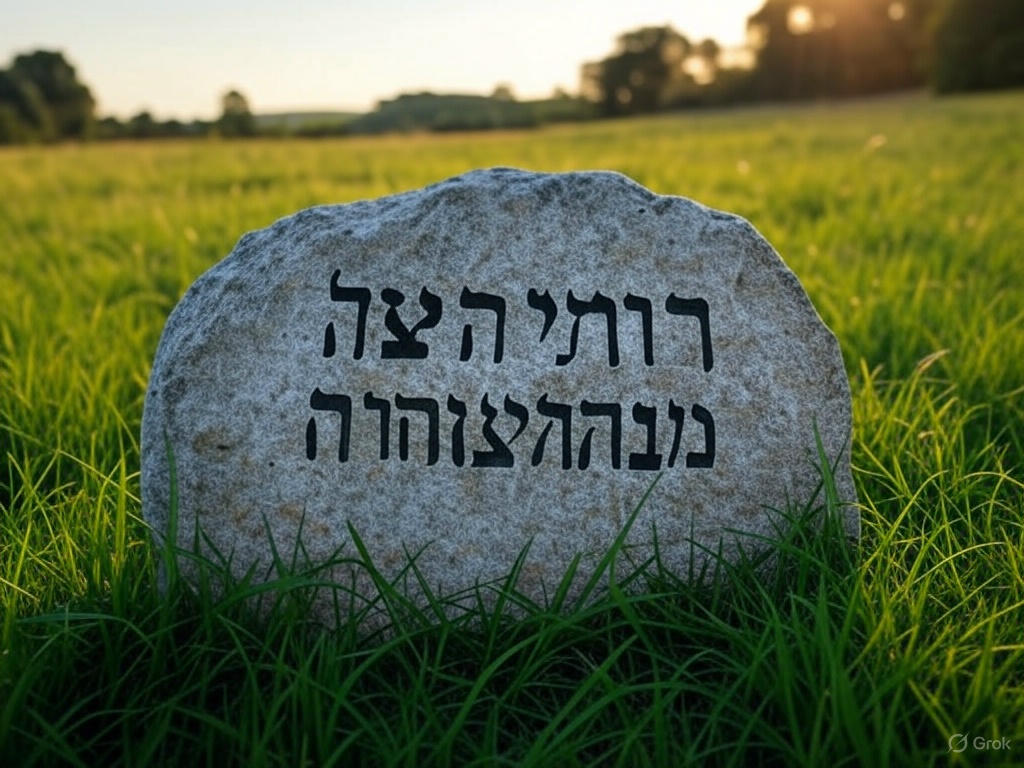
[Note: King James Version says “juniper tree,” but the Hebrew “rotem” is actually a small desert broom tree, the only shrub giving shade in Israel’s wilderness. New King James Version refers to it as broom tree].

Depressing News

Elijah had just celebrated a huge victory on Mount Carmel. He watched God send fire from heaven. Most of us would call this moment unforgettable. But when he got home, there was a letter in the mailbox – a death sentence from Queen Jezebel. Elijah knew that she had the power and the resources to end his life. He was afraid, desperate, and feeling hopeless. He fled south to the desert of Beersheba, about 80–100 miles away.

Dry Broom Tree Inn

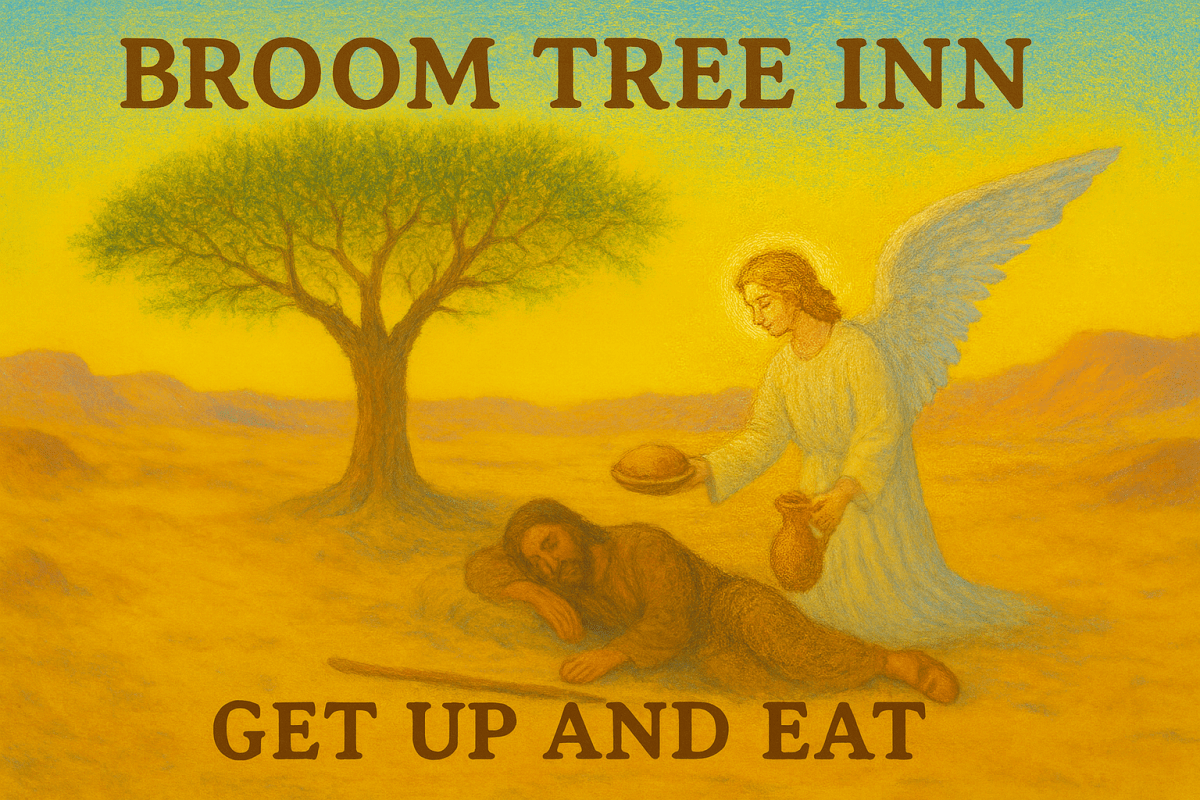
Exhausted and afraid, Elijah collapses under a broom tree. This is a small desert shrub. It’s not impressive and majestic like the cedars of Lebanon or the tall oak trees. It was a simple and often ignored little shrub. But it provided a little shade, and rest for the weary Elijah. In our world, “Broom Tree Inn” would get zero stars on a Google Review. It wasn’t a comfortable place, it didn’t have even the basic necessities. All it had was a little shade. But the broom tree has something other trees don’t: survival skills. Arborists (plant study experts) say that it survives because it develops deep root systems to tap into underground water sources.

God often meets us in small, quiet ways before great breakthroughs. Perhaps from the most unexpected places, you received a comforting word, song, or scripture that revives your spirit. Or a friend or family member who sends you a text with a verse that encouraged them. Don’t discount these as insignificant occurrences while you face tough situations in life. Perhaps those are the unexpected “broom trees” that God has provided for you to take a breath, and reflect back on the situations of life.

Depression to Divine Intervention

At his lowest, Elijah asked God to let him die. But God didn’t scold him. Instead, He sent an angel with breakfast at the Broom Tree Inn and simply said, “Get up and eat.” That moment shows God’s heart—He cares for our basic needs before calling us to anything big. Elijah was so drained that he ate and went right back to sleep. The angel returned again, reminding us how patient God is and how deeply He understands the exhausted and the overwhelmed.

Depression and desperation are hard to explain to anyone who hasn’t walked through them. They make you feel alone, rejected, and painfully lost. The enemy uses those moments to drag you into darker places and push you toward hopelessness. Elijah—who was destined to never taste death—was so crushed that he begged for it. That’s what depression can do.

But Psalms 34 says the Lord stays close to the brokenhearted and saves those crushed in spirit. The Holy Spirit who hovered over the empty, dark earth in creation is still near you today. He’s not just hovering—He’s right beside you, holding your hands, steadying you, comforting you.

The bread and water Elijah received weren’t just food. They pointed to Jesus, the Bread of Life and the source of Living Water (John 6:35; John 4:14). And just like the angel spoke to Elijah, Jesus still whispers to every weary soul today: Get up. Be nourished. Keep going—your journey isn’t over.

Destiny Emerging from Despair

After that simple meal under the broom tree, Elijah found the strength to walk 40 days to Mount Horeb. This was the very place where Moses once met God. It was also where Israel’s story was shaped. We would think that Elijah was wandering aimlessly. But instead it was God leading him, step by step, back to the place where divine purpose was revealed.

Elijah thought he had failed. He thought his story was over. But God was quietly positioning him for what came next. He would anoint a new king. Jehu was appointed for specific tasks. Elisha was called to continue the ministry. It seemed like rock bottom. In reality, it was the sculpturing process. The Master was creating something beautiful from a rock.

Divine works in Deserts

The desert is more than an empty, dry land. In Hebrew,”midbar” shares a root with “dabar”, meaning “to speak.” Oftentimes, when we are ripped out of our comfort zone, we are thrown into a seemingly hopeless place. We don’t understand that this place can also become where God speaks most clearly.

Moses was called into leadership in a desert.
Jacob wrestled with God in the night wilderness.
Hagar heard God in the desert of despair.
Philip met the Ethiopian eunuch in a deserted land.

The desert isn’t a sign that God has turned His back on you. I’ve learned that God often chooses these unlikely places to teach and meet with you. He speaks with you in ways you couldn’t hear anywhere else.

Life Application

Maybe you’re reading this right in the middle of your own “Broom Tree Inn” season. The days seem long and heavy. It could be a diagnosis you never imagined that keeps echoing in your mind. Or the job you counted on suddenly disappears. Or grief quietly sits in the corners of your home because someone you love is no longer there. Or when the hurtful words and actions of others make you feel small and unseen.

If that’s where you are, take heart. James 5:17 reminds us that Elijah was a man just like us. One of Scripture’s greatest prophets—yet the Bible doesn’t hide his exhaustion, fear, or desert moments. Elijah had his broom tree season too. But everything changed when he heard God’s gentle whisper. And remember this: we only whisper when we’re close. God wasn’t distant in Elijah’s despair—He was right beside him.

As our own family walks through our season of grief, we can honestly say: the Lord stays close to the brokenhearted. His steady presence lifts us. It carries us and gives us the strength to keep serving Him with renewed courage each day.

So, take heart. You are not forgotten. You are not lost. You are exactly where God is able to meet you. And like Elijah, you will rise again—not in your strength, but in His.

Leave a comment

Spanish version: https://dewdropsofmanna.com/spanish-pages-list/posada-del-arbol-de-la-escoba/

Listen to blog on Spotify:


Kernels Eternal

What’s the most precious or expensive thing you’ve ever had? Maybe it was something or someone you saved for, longed for, prayed for, cherished dearly when you got it, and thought you could never live without. Now imagine losing it completely—gone in a way you could never retrieve it. At first, the loss feels painful, even pointless. You feel the heart wrenching ache of knowing that it is gone forever. But the Bible tells us that there is still hope.

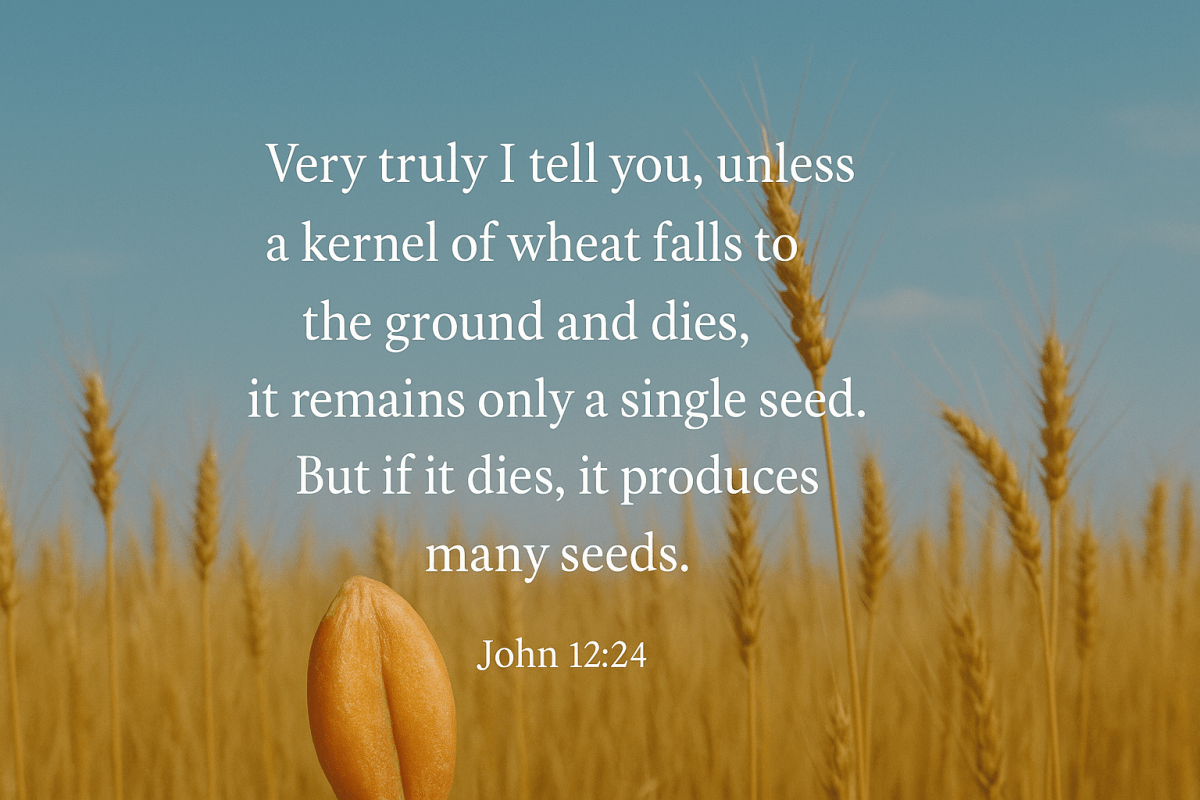
John 12:24 -“Very truly I tell you, unless a kernel of wheat falls to the ground and dies, it remains only a single seed. But if it dies, it produces many seeds.” 

These words are spoken by Jesus at as He is in his final week before the cross. He’s in Jerusalem for Passover, and the crowds are buzzing—some are hailing Him as the Messiah with palm branches, but others are whispering doubts. Greeks (Gentiles) have just approached Philip asking to see Jesus, signaling that His message is spreading beyond the Jews. In response, Jesus starts talking about His “hour” coming—the time of His glorification through death and resurrection.

Kernel that stands.
When Jesus spoke about a kernel of wheat, He revealed that death isn’t the end—it’s the doorway to multiplication. Think about a kernel while it’s still on the stalk, alive in the field. It’s safe, wrapped in a protective shell. It looks smooth, whole, and beautiful. It sways in the soft breeze, enjoys the gardener’s daily care, and draws steady nourishment from the soil. Life seems secure. Yet even in all these favorable conditions, one thing remains true—it stays alone. Its potential is locked inside, never released. And if it never falls and breaks open, that potential dies with it. In time, the kernel may wither on the stalk or be eaten, leaving no legacy behind.

Kernel that falls.
But when the kernel of wheat falls to the ground, everything changes. It separates from the stalk, buried in dark, unseen soil, and breaks open—dying to its former form. Hidden away, it no longer feels the soft breeze, basks in sunlight, or enjoys the gardener’s daily care. At first, it seems lost in obscurity. Yet in that very process, life begins. Roots push downward, a shoot rises, and slowly a harvest emerges. The kernel releases the life hidden inside, and what was once a single seed multiplies into many. Its purpose is fulfilled: producing fruit, blessing others, and sustaining life. Through death comes abundance, through breaking comes growth, and what seems lost becomes a legacy.

Jesus – the first kernel
Jesus is the first kernel that fell and died, yet in His death, He brought life to the world. Like a single seed, He left the glory of Heaven to enter the world, fully human yet fully God. On the cross, He “fell to the ground” in death, appearing defeated to the world. For three days it seemed that all hope was lost, and that death has indeed won. But this was not the end—just like a kernel in the soil, His death unlocked life. Through His resurrection, Jesus produced the ultimate harvest: salvation, eternal life, and the promise that anyone who follows Him can bear fruit beyond what they could imagine.

Kernel named Paul
In Galatians 2:20, Paul says, “I have been crucified with Christ and I no longer live, but Christ lives in me.” Paul died to his old life as a Pharisee, took on the unglamorous task of being a missionary, faced shipwrecks, beatings, and imprisonment. But in the end churches sprang up all over the Roman Empire.

Modern Day Kernels


Charlie Kirk: On September 10, news from Utah broke our hearts—Charlie Kirk, founder of Turning Point USA, was assassinated while speaking at Utah Valley University. Only 31 years old, a young dad giving everything to inspire the next generation, he faced protests and attacks for boldly standing for faith, family, and freedom. He could’ve chosen comfort, but instead he “died daily” to ease, and in the end paid the ultimate cost. Like a kernel of wheat that falls and multiplies, his life is already bearing fruit. Turning Point USA has reached millions, sparking faith and activism among students, and now his story is igniting others to carry the torch. Pray for his wife Erika and their two little ones—may God turn their grief into purpose.

Graham Staines: In 1999, Australian missionary Graham Staines and his two young sons were burned alive in their Jeep by extremists in Orissa, India. The tragedy was unspeakable, yet just days later his wife, Gladys, publicly forgave the killers and carried on the mission for years. That courageous act planted seeds far beyond their loss. Today, the village where it happened has multiple churches, dozens have come to Christ—including some from the very mob—and the mission has grown with hospitals, hostels, and outreach programs. Their suffering became a harvest of grace and healing.

Kernels in Family
In my own family, I’ve seen firsthand what it means to live as a seed for Christ. My late grandmother, Alummoottil Ammachi, wasn’t a missionary, yet she served the Lord with a quiet, sacrificial heart. Widowed at just 45, she raised six children while still putting generosity first—often giving to others even if it meant her own family went hungry.

My uncle, the late Pastor M.I. Thomas, spent more than 50 years serving in Gwalior, India. Beatings, cuts, bruises, and crushing poverty were daily realities for his family. Yet through his endurance, the Lord planted churches that still stand strong across that region today.

And many of you may know about my daughter Hannah, who went to be with the Lord last year at just 16. She poured herself into serving right up until her final days. Though losing her has been our greatest heartbreak, her life has already inspired a wave of young people in our church to step up and serve.

Each story reminds me that the kernel must fall and “die” before it multiplies. Pain isn’t wasted in God’s hands—He turns sacrifice into harvest.

Life Application:
Whatever you’re walking through today—stress at home, a deep loss, or even health struggles—remember the “kernel.” A.W. Tozer once said, “It is doubtful whether God can bless a man greatly until He has hurt him deeply.” Sometimes God allows us to be broken so new life can spring up.

Ask Him to help you die to fear, to personal ambition, to the pull of popularity or riches. Pray for courage to love others even when it’s risky, and to stand for truth like Charlie Kirk and so many others who planted their lives as seeds. Come alongside those carrying the weight of loss—whether it’s a grieving friend or a missionary family on the field. Your hidden seed, sown in tears, will never stay buried. God multiplies what we surrender.

Jesus promises, “Whoever serves me must follow me; and where I am, my servant also will be. My Father will honor the one who serves me.” (John 12:26). The harvest is certain—more souls reached, more lives transformed, more joy than you can imagine.

So here’s the challenge: what “kernel” will you let fall this week? Share it in the comments—we’d love to encourage one another as we plant together.

Leave a comment


Worrier to Warrior

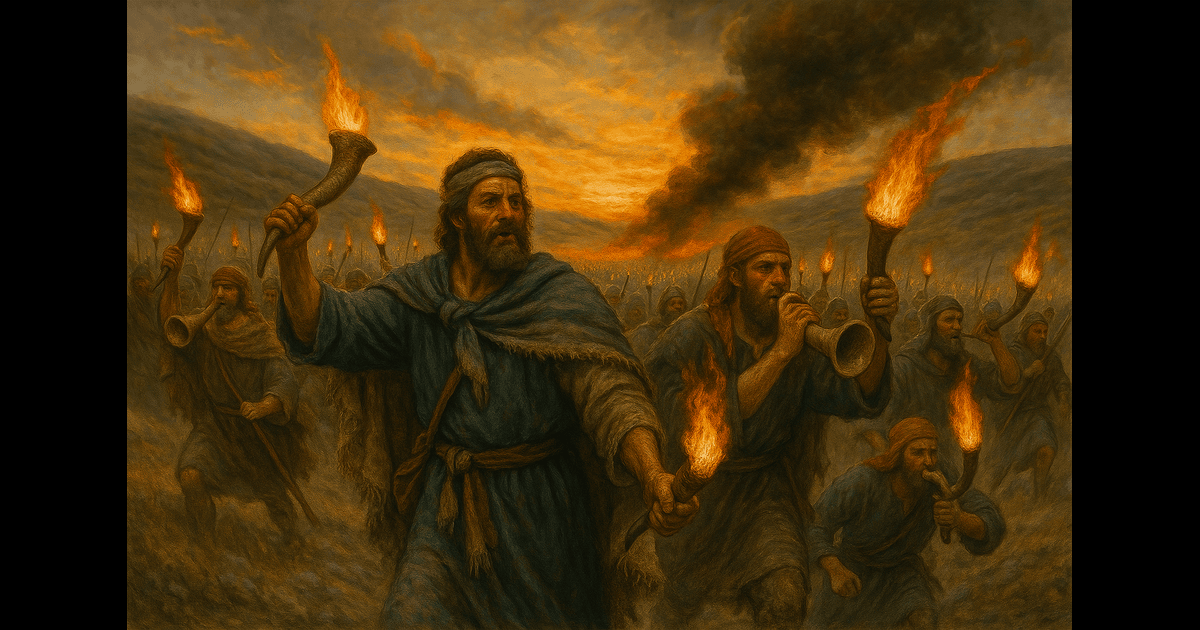
Mother Teresa, Billy Graham, and William Carey are all names etched in hearts of people for being great men and women of God. But they all had one thing in common. They all went through the dark tunnels of life where they asked the question most of us ask: “Why, God, Why?” The Bible talks about one famous warrior who asked the same question – Gideon.

Judges 6:12-13 (NIV)– When the angel of the Lord appeared to Gideon, he said, “The Lord is with you, mighty warrior. “Pardon me, my lord,” Gideon replied, “but if the Lord is with us, why has all this happened to us? Where are all his wonders that our ancestors told us about when they said, ‘Did not the Lord bring us up out of Egypt?’ But now the Lord has abandoned us and given us into the hand of Midian.”

God’s Call and Gideon’s Condition
If you and I were in God’s place we would’ve reserved title “mighty warrior” or “mighty man of valor” to the world’s most successful war survivor, or the captain of the United States Armed Forces. But when God called Gideon, he was indeed in sad condition, trying to bring some bread to his family before the Midianites came and ransacked everything.

God’s Call in God’s Timing
God’s call to Gideon was not exactly the right timing in our eyes. We would’ve waited for the most opportune time, such as after a major war was won, to bestow this medal of honor. But when God called Gideon, he was anything but a warrior. Scattered across the Bible are many such instances. Abram was called Abraham (father of nations) when he had no children; Moses was called to lead Israelites when he was most drained in life after being in Midian for 40 years. God often calls people to do his work, in God’s perfect timing.

God’s Call to an active Gideon
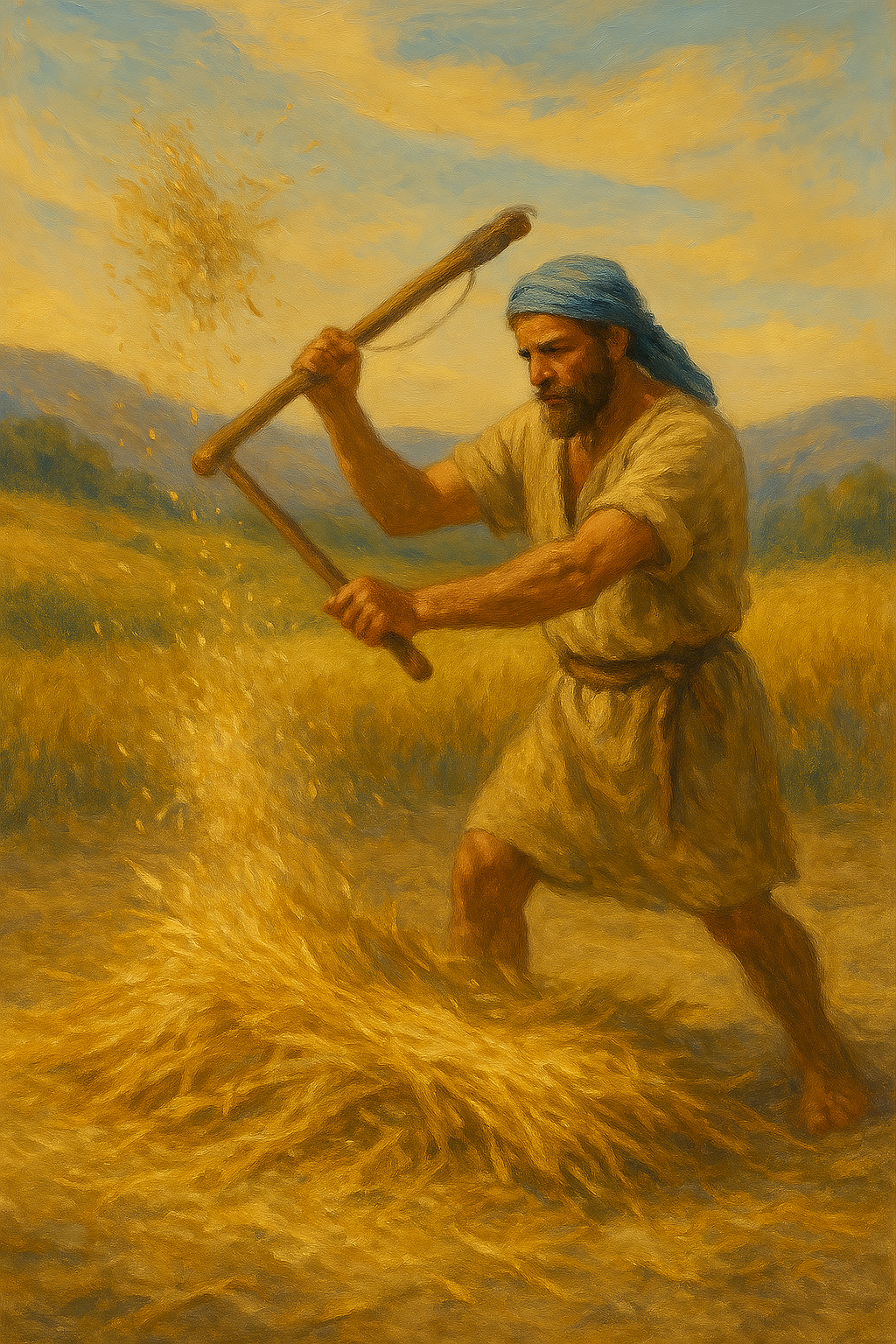
Often we hear people say that they will serve God when God tells them to serve. But we see when God called Gideon, he wasn’t just sitting idly waiting for God to suddenly appear out of the sky to appoint him. Gideon was doing the best he can do, improvising the situation, and trying to protect what belonged to him. He was aware of the enemy’s tactics and he was also aware of the enemy’s weaknesses. He knew that if he threshed wheat (which is supposed to be done in an open field) in a winepress (a low ground with sticky stuff all around), the enemy wouldn’t bother coming there. So in that sense, he was unknowingly being a warrior. If you want God to use you for a greater purpose, start with what you have already. Begin investing in the talents you have, work hard on serving God’s people in the smaller roles.

God’s Call that seemed sarcastic
The Angel of the Lord (which is interpreted by Bible scholars as Christ himself) coming and calling a scared, dejected and worn out Gideon a mighty warrior might seem sarcastic to us. Some may even consider it insulting. But Gideon understood that this was no ordinary man talking with him. Gideon’s response starts with “Pardon me, my Lord.” Gideon had the mindset even in his pain to understand the one talking with him was here for a purpose. If you are going through pain and the Lord comes to you with a gentle whisper, perhaps a word from the Bible, a thought in the night when your pillows are drenched with tears, don’t ignore Him. Allow the Lord to impart his divine plan into your life.

Gideon’s Response – A Cry of Desperation
Gideon’s response to God was not a statement of one who had no faith, or a statement of one trying to question God. Rather it was a cry of desperation from a man who was trying so hard to hold on God’s Word when everything around him was failing. His land was being ravaged, hope was fading, yet he still believed God was there—in that very moment and situation. He asked the honest, raw questions many of us carry deep inside. If you’re struggling too, know this: God isn’t angry at your doubts or questions. He’s listening, waiting to hear your heart. In fact,  the Lord came and sat next to you, just to hear you share your heart. Speak openly to Him and let the Holy Spirit guide you. The answers may not come all at once, or in the way you expect, but God is sovereign—and when He gives you direction, it’s always for your good.

Gideon’s Reaction – Jehovah Shalom
Judges 6:24 (NLT)- “And Gideon built an altar to the Lord there and named it Yahweh-Shalom (which means “the Lord is peace”)”. Gideon named the place Jehovah Shalom— not after the battle was won, but after he had an encounter with God. This commonly known name of God was birthed in the midst of utter chaos and confusion by a man who was called a warrior when he was infact a worrier. One encounter with God changed his perspective on things and caused him to put on the armor of faith.

Hall of Fear to Hall of Faith
Gideon is mentioned in Hebrews 11, the famous “Hall of Faith” chapter, which highlights Old Testament figures who lived by faith and were used mightily by God — despite their flaws, fears, and failures.

Hebrews 11:34 “And what more shall I say? For time would fail me to tell of Gideon, Barak, Samson, Jephthah, of David and Samuel and the prophets—who through faith conquered kingdoms, enforced justice, obtained promises, stopped the mouths of lions, quenched the power of fire, escaped the edge of the sword, were made strong out of weakness, became mighty in war, put foreign armies to flight.”

Personal Story
Our dear daughter Hannah was an example of one who held on to her faith till the very end. Despite going through 9 years of physical ailments and sickness she loved the Lord, served her Master, until He called her home to her eternal rest at the tender age of 16.

Life Application
Gideon asked the question I’ve asked—maybe you have too: “If the Lord is with us, why has all this happened?” That wasn’t a complaint or something that questioned God’s existence. It was the kind of question that comes when your heart is in pieces and heaven feels silent. I don’t think God was offended by it. He didn’t correct Gideon. He didn’t even answer the “why.” Instead, He told him what to do next. “Go in the strength you have… Am I not sending you?” It wasn’t the answer Gideon asked for, but it was the one he needed. And somehow, that was enough for him to take a trembling step forward.

Maybe you’re asking “Why, God?” right now—I still do sometimes. And it doesn’t make you faithless. It makes you real. What I’m learning is this: God may not always explain the pain, but He’s still in it with us. He still speaks. And when He gives you even a whisper of what to do next, that’s your lifeline. You may not understand everything, but if you have His presence and one next step—you have enough. Take it. Not because you feel strong, but because He is stronger. Not because you know what’s ahead, but, as the song writer says, because you know that the One who holds tomorrow is the One who holds your hand.

Spanish version: https://dewdropsofmanna.com/spanish-pages-list/de-preocupado-a-guerrero/

Hindi version: https://dewdropsofmanna.com/hindi-pages-list/चिंता-करने-वाले-से-योद्धा/


Leaving A Legacy: Tribute to Hannah

Abraham Lincoln, Gandhi, Mother Teresa, Martin Luther King Jr.—names we remember not just for what they did, but for the legacy they left behind. For the most part, their lives were measured and honored after they were gone. But the Bible speaks of a man who evaluated his own life before the end came—Paul. Sitting in a Roman prison, he wrote with quiet confidence:

“I have fought the good fight, I have finished the race, I have kept the faith.” – 2 Timothy 4:7

One of the greatest stories of the Bible is about how Saul the persecutor became Paul the apostle.  A man who was the murderer of Christians became the tool that God used to save many. Through shipwrecks, imprisonments, beatings, and rejection, he remained steadfast in his mission to preach Christ. His life was not easy—but it was poured out faithfully in service to his Savior. When Paul declared that he had fought the good fight, finished the race, and kept the faith, he wasn’t boasting—he was affirming that a life lived in faithful obedience, even through hardship, leaves a legacy that outlasts suffering.

A Reflection: One Year Without Hannah

June 4th marks one year since our dear Hannah went home to be with the Lord. And as we look back on the 16 years God gave her to us, we do so not only with tears but with deep gratitude. For nine years, Hannah faced a health condition that reduced her blood platelet count. Her journey included blood transfusions, hospital visits, and many sleepless nights—but she endured it all with quiet strength. Her  life was not long by earthly standards, but she ran her race well. Endowed with quiet strength, a strong faith, and a servant heart, she lived a life that is an example to all. She truly fought the good fight—not just through her health challenges but in how she chose to live, love, and serve in the face of them.

Her absence is felt every day. We miss her laughter, her gentle reminders, her thoughtful help in every area of life. But even more, we continue to witness her legacy. Her fingerprints are still on our ministries, her influence still shapes our home, and her example continues to inspire others.

Her Legacy: Lessons from Hannah’s Life

1. Serve Quietly but Faithfully

Many people knew Hannah for her role in AWANA ministry on Friday nights. But her true service began on Thursdays, typing up songs, planning details—and extended to Saturdays for the post AWANA management tasks of the week. Her consistency behind the scenes taught us this: legacy isn’t built in the spotlight but in faithfulness. If you’re looking to make an impact, don’t wait for a platform. Find where the ministries of the church need help, and start by serving quietly and wholeheartedly where you are.

2. Support Others with Encouragement

Hannah wasn’t just a daughter—she was an encourager. Whether proofreading devotionals for Dew Drops of Manna, helping record audio, translating content, or simply reminding us of God’s promises, she had a way of lifting others up.

Hannah’s gift of encouragement reached beyond her family and friends—it touched the halls of the public schools she attended. Her impact was so profound that, even four years after she left elementary school, her teachers still remembered her kindness and service. After her passing, the school created an award in her name to honor exemplary service, now given at every graduation. Among her peers, she was a quiet light. A classmate wrote us a heartfelt letter, sharing how Hannah had been a source of hope during a difficult time. If you want to leave a legacy, be someone who encourages—especially when others are going through hardships.

3. Prioritize God’s Word

Over 2,200 days. That’s how long her YouVersion Bible reading continuous streak ran at the time of her passing. She treasured God’s Word above all, making time for it every day, no matter how she felt. That’s a legacy anyone can build—no special skills required, just daily commitment.

In her room, we discovered a precious notebook, lovingly handwritten each Sunday. Page after page—75 in all—were filled with thoughtful and detailed notes she took from the Sunday morning sermons preached by various pastors. It’s a beautiful reflection of her hunger for God’s Word and the quiet faith she nurtured week after week.

In a world full of distractions, sufferings and life’s challenges: anchor your life in Scripture.

4. Care for Home and Family

Hannah’s ministry began at home. At times she helped cook and bake, helped with her sisters’ schoolwork, reviewed their Sunday school memory verses, and handled many household chores when we were busy with church ministries. Discipline and avoiding procrastination were hallmarks of her life.  If you want to be used by God, start in your own home.

5. Live Counter-Culturally

She wasn’t drawn to trends or social media. She understood that her worth didn’t come from fitting in but from walking faithfully with Jesus. Her courage to be different—even in a world that pressures conformity—is a reminder that Godliness is still beautiful. A legacy worth leaving is one that stands apart from the world and points to Christ.

6. Courage from the Lord

Hannah was also a woman of quiet courage. Naturally reserved and not one to seek the spotlight, she wasn’t someone you’d expect to lead from a stage. But when the AWANA ministry needed direction, she stepped up. Relying on the Lord for strength, she became a steady guide—even to the adult leaders. When asked about her boldness, she said simply, “I was afraid—but there was a need, and God gave me the strength.” Courage isn’t the absence of fear—it’s trusting God enough to serve in spite of it. That’s the legacy Hannah left behind.

7. Served till the end.

Even in her final days, Hannah’s heart was fixed on serving. Sitting in her hospital bed with IV lines in both hands, she told the AWANA leaders she was ready to help with the upcoming anniversary event. Her body was weak, but her spirit was unwavering. After she passed, we found the last two notes on her iPhone—lists of preparation steps and tasks for the anniversary, written just three days before she went home to be with the Lord. Her life was a quiet, powerful testimony of faithfulness—right to the very end.

Life Application: Fight Your Good Fight

As we reflect on Paul’s words and remember Hannah’s life, we’re reminded that we all have a race to run. It won’t always be easy—life comes with trials, delays, and disappointments. But the goal isn’t to run fast—it’s to run faithfully. Hannah’s life showed us that even a short journey can leave a lasting impact when it’s lived with purpose and poured out for Christ. She served quietly, encouraged others, loved God deeply, and held fast to His Word—right to the end. Don’t wait for perfect conditions to be faithful. Start now. Pray steadfastly. Serve where you are. Encourage someone. Stay rooted in Scripture. Fight your good fight. Because one day, we’ll all reach the finish line—and what a joy it will be to echo Paul’s words: “I have fought the good fight. I have finished the race. I have kept the faith.”

Spanish: https://dewdropsofmanna.com/spanish-pages-list/dejando-un-legado-tributo-a-hannah/

Hindi: https://shorturl.at/ENi5D

Victories and Wounds – 25 Years

Living in a world that is constantly racing towards the next chapter of success, getting the best car and living in bigger houses, we often tend to forget the victories of the yesteryears. In the Bible we see a man named Samuel who was careful to pause, reflect and celebrate what God has done in the past.

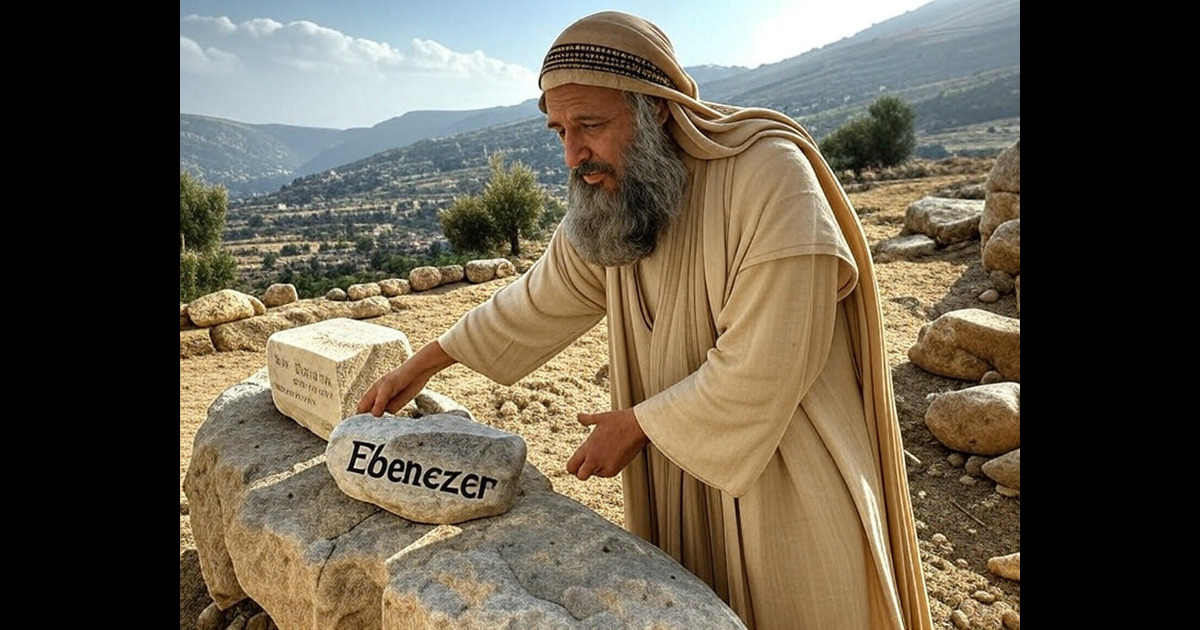
1 Samuel 7:12 – Then Samuel took a stone and set it up between Mizpah and Shen, and called its name Ebenezer, saying, “Thus far the Lord has helped us.”

Prior to this incident, Israel went through seasons of happiness and seasons of hopelessness. Seasons that included losing the precious Ark-of-the-covenant to Philistines, times of lost spiritual identity, and years of utter chaos due to their disobedience. However, once they put away their idols and returned back to the Lord, they started enjoying the goodness and love of the Lord.

In 1 Samuel 7, the Israelites witnessed a miraculous victory—God Himself thundered from heaven, throwing the Philistines into chaos and delivering His people. It was clear: the Lord was fighting their battles. So Samuel took a moment to erect a monument. Unlike the monuments of our day that glorify the leaders of wars, this monument was a testimony for others to know about the Lord.

25 Years of Walking with God as a Family
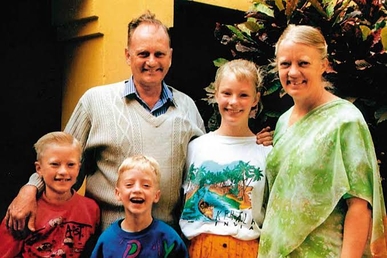
This week, my wife and I celebrate our 25th wedding anniversary. This anniversary is one that carries the glow of mountaintop moments and the weight of deep valley experiences.

Looking back, we remember eight long years of crying out to God for a child—years marked by heartbreak, miscarriages, and moments of crushing despair. The silence felt heavy, and the nights were often sleepless. At times, we wondered if God even heard us. But our God is faithful. In 2008, He answered our cries and fulfilled His promise—blessing us with our first child, a testimony to His goodness and perfect timing.

The next four years were filled with joy of raising our baby, while asking the Lord for another miracle that would complete our family. Following years of prayers and petition, the Lord miraculously granted us a set of sweet twins. When the doctors told us another child wasn’t possible, God whispered a different plan—and gave us twins. Two lives. Two signs that He is the God who brings life where there was once only impossibility.

During the birth of our twins, a hospital error nearly cost my wife her life. For 12 terrifying seconds, her heart flatlined. But God stepped in. He breathed life back into her—restoring her to be the incredible mother of our three children. All glory to the One who gives life and holds it in His hands.

In 2013, after 14 years at a top financial firm, I lost my job as the company moved jobs overseas. What followed were six hard years—jobless seasons, short-term work, and financial uncertainty. Yet through every low point, God proved faithful. He became our Provider, and we learned to trust Him like never before.

In March 2015, our daughter Hannah was diagnosed with a condition that severely lowered her blood platelets. It marked the beginning of nine long years of health struggles. Hospitals. Specialists. Sleepless nights. It was the kind of sustained trial that can weigh you down and test the very core of your faith. However, we saw the hand of the Lord through it all. Hannah was able to endure her trials with a grace that only God could give.

Deepest valley of pain
Last year, we had to go through the unthinkable: we said goodbye to our beloved oldest child at just sixteen years old. Nothing prepares a heart for that kind of loss. It has been a season of sorrow, with groaning of our hearts that only God can understand. But we feel the hands of Jesus holding us when we could no longer stand. Even here—especially here— we choose to believe that God is still God. Still good. Still with us.

Life Application
So, this week, we raise our Ebenezer and remember the goodness of the Lord. While it doesn’t portray a perfect, polished story, it shows that the Lord is good in every season of life. From the crucibles of suffering to the crowns of miracles, we’ve experienced the unchanging hands of God. Our marriage has held both miracles and mourning. And through it all, the Lord has helped us.

In the past 25 years, we have loved, had disagreements, wept, laughed, grieved, and persevered. We have learned that God doesn’t always deliver us from the fire—but He never leaves us in it alone. We’ve come to realize that while we all dream of lives as lovely as a bed of roses, it’s easy to forget—roses don’t grow without their thorns. Yet perhaps it’s in those thorns that God weaves His greatest lessons.

So today if you are going through rough waters, stormy seas, and painful seasons that seem unending, choose to trust the Lord that he is sovereign and his ways are always perfect. Even in our days of questioning why, we hold fast to the truth that He is our Ebenezer—our rock of help, now and always.

Spanish:https://tinyurl.com/ybxpavnc

Hindi: https://tinyurl.com/58srm4yr