
Walking in Valley of Baca

Traveling for business or vacation has become more hectic, with flight cancellations, poor hotel rooms, and unexpected events like hurricanes often disrupting plans. The Bible likens our life to a journey, filled with both joyful moments and times of uncertainty. Psalm 84 offers a powerful outline of this life journey.

Psalm 84:5-7: Blessed are those whose strength is in you, in whose heart are the highways to Zion. As they go through the Valley of Baca, they make it a place of springs; the early rain also covers it with pools. They go from strength to strength; each one appears before God in Zion.

Psalm 84 is classified as a pilgrimage psalm, sung as praise by those who traveled to Jerusalem to worship.

Meaning of Baca
The Valley of Baca, derived from the Hebrew word “bakah,” meaning weeping, is often referred to as the Valley of Weeping. Pilgrims are said to pass through this valley on their journey, though scholars debate whether it’s a real location or a metaphor for a difficult phase in life. Regardless, they agree that Baca represents a challenging experience.

Strength before Baca.
Psalm 84:5 begins with, “Blessed are those whose strength is in you,” highlighting that before pilgrims reach the valley of Baca, they are strengthened by the Lord. This verse emphasizes that we are not meant to journey alone; God offers us a reliable source of strength, but we must choose to rely on it.
Passing Through Baca
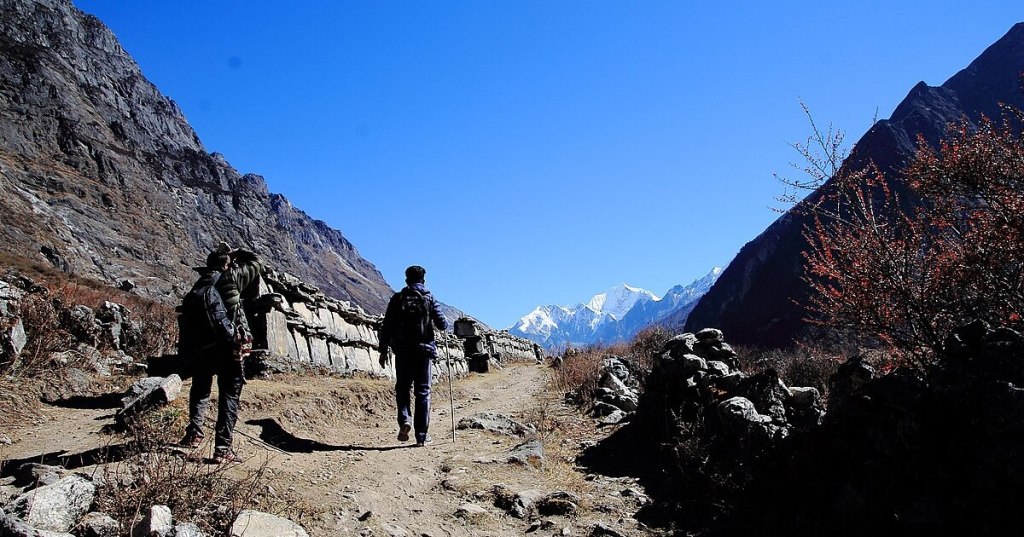
Traversing this treacherous valley means enduring harsh, arid conditions that can leave travelers extremely thirsty. Some of the characteristics of Baca:

  • Dry land: Baca is a place of extreme, and sometimes extended periods of dryness. There will be times you feel hopeless like Hagar felt (Genesis 16).
  • Deserted land: Baca is also a deserted place where you feel there is no one to help. Walking on roads marked with rocks of uncertainty is certainly painful.
  • Distorted land: In Baca, it can feel like everything you’ve known and believed, and even your faith in God, becomes distorted and distant. Trying to navigate your way through this land may seem futile at times.

Baca to Berakah
The Psalmist reminds us that when we trust God, the Valley of Baca can transform into the Valley of Berakah, a place of blessings. Even in dry times, they discovered pools of water, and as they waited for relief, God’s power came through, bringing refreshing rain to their parched land.

Strength to Strength
Travel can often leave us weary—kids exhausted, adults drained, and spirits low by the time we collect our luggage. But in this journey, something extraordinary happens. The traveler who trusts in God doesn’t just endure; he rises above it all, feeling more rejuvenated and full of vigor than ever.

End of Journey
Verse 7 reassures us that everyone will reach their destiny: Zion. Despite the dryness of the desert, the scorching heat, and the long, desperate days waiting for rain, nothing could stop the travelers from arriving at their destination.

Personal story
This blog article is written from the depths of the worst Valley of Baca my family and I have ever experienced. On June 4, 2024, our beloved 16-year-old daughter, Hannah, was called to her eternal home. Her sudden passing plunged us into a deep valley of weeping. Hannah was not just a proofreader, translation assistant, and audio reviewer for this blog ministry—she was our greatest encourager. Her absence is deeply felt in our daily lives and in all the ministries we are part of.

Walking through this valley has been incredibly difficult, yet the Bible reminds us that God is close to the brokenhearted. In this valley, where noises of confusion and despair seem to overwhelm us, we still hear God’s gentle whispers of comfort. In moments when the weight of grief feels unbearable, we sense God’s eternal hands beneath us, holding us up. As waves of sadness bring rivers of tears, we feel His presence wiping them away, renewing our strength and giving us hope. We hold tightly to the promise of His Word, knowing that we will see her again on the other shore. But in the midst of our sorrow, we are encouraged by the legacy of our daughter’s life, which continues to produce new lives committed to serving the Lord.

Life Application
One thing we’ve learned through our own grief is that everyone walks through their valleys of Baca at some point. If life has led you through seasons of deep disappointment, heartbreaking loss, or overwhelming confusion, take heart—God has promised to be with you every step of the way. Even when the enemy whispers that it’s too much to bear, remember God’s unshakable promise: He will never leave you (Hebrews 13:5). Let His promises nourish your soul, and allow His Word to strengthen your heart. The Psalmist reminds us, “O LORD of hosts, blessed is the one who trusts in you.” The same God who gave us strength before our valley, and walks with us through it now, is faithful to guide you through yours. One day, we will look back and see His faithfulness through it all. So even in grief, choose to find hope, for our God is the same yesterday, today, and forever.

Side Note:
I began writing this article before Hannah went to her eternal home. It’s taken time and God’s strength to come back and finish it. My family and I would deeply appreciate your prayers as we continue to walk through this valley of grief.

Audio version: spoti.fi/3NCh0un

Spanish version: ​https://dewdropsofmanna.com/spanish-pages-list/caminando-por-el-valle-de-baca/

Hindi version:​ ​https://bit.ly/4hh2DJI

Cast Your Cares

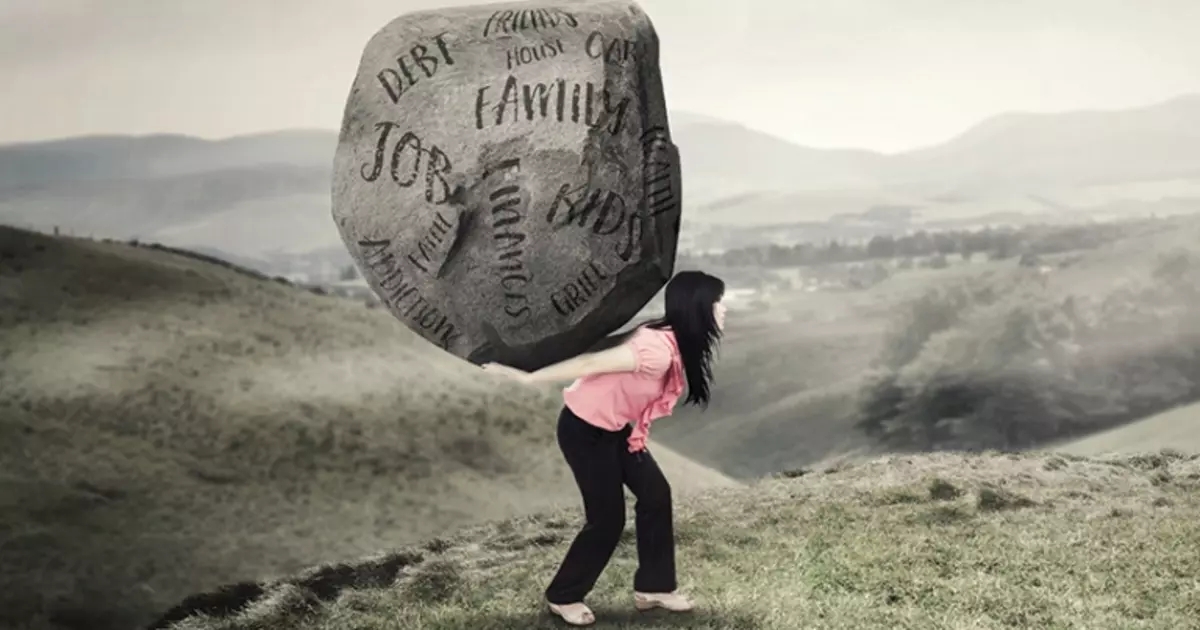
Have you ever experienced those restless nights, tangled in worries and uncertainties? Perhaps it is anxiety about your health, family or finances. My family and I have experienced our share of these challenges firsthand. But the Word of God gives us a solution for it: Cast it and rest.

1 Peter 5:7 – Casting all your care upon Him, for He cares for you.

Casting Your Load
The English term “casting” doesn’t quite capture the full impact of Peter’s message. In Greek, “casting” is translated as “epiripto,” derived from “epi” (meaning “on top of”) and “ripto” (to hurl, throw, or cast with force). This word conveys a powerful and forceful action, suggesting a vigorous and decisive throwing or flinging of something to be free from its burden. In our daily lives, it’s like tossing heavy luggage into the trunk of a car after carrying it a long way.

Casting to the Carer
The word for “he cares” in Greek is “melei”, which means to bestow careful thought upon, to give painful attention to, or to be earnestly interested in. Peter’s message to us is this: We have a God who gives utmost attention to the details of your anxieties, and is able and willing to help you when you unload your burdens on to Him. David tells us in Psalms 55:22 – “Cast your burden on the LORD, and He shall sustain you; He shall never permit the righteous to be moved.”

Casting With Both Hands
The imagery of this verse vividly portrays using both hands to lift a heavy burden off our shoulders. Similarly, we can use our hands of prayer and promises in God’s Word to cast our burdens.

Casting Helpers
Knowing that we are not able to bear the burdens ourselves, God has promised us helpers for our time of need:

  • Holy Spirit: When your head is spinning with the seemingly unending worries, and your heart is wounded with the taunting attacks of the enemy, there is a helper who is always by your side: the Holy Spirit of God. Romans 8:26 says: “In the same way, the Spirit helps us in our weakness. We do not know what we ought to pray for, but the Spirit himself intercedes for us through wordless groans.”
  • Jesus our High Priest: Jesus who tasted the pains and sufferings of mankind, is now glorified and sitting at the right hand of God, is our advocate in heaven. Hebrews 4:15–16 (ESV) says “For we do not have a high priest who is unable to sympathize with our weaknesses, but one who in every respect has been tempted as we are, yet without sin. Let us then with confidence draw near to the throne of grace, that we may receive mercy and find grace to help in time of need.”

Casting Example
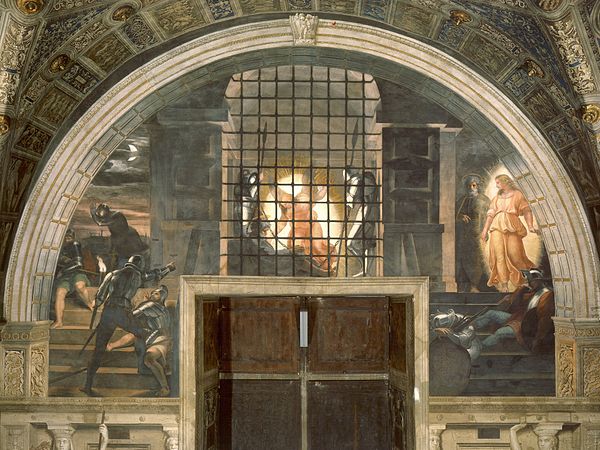
A perfect example of someone who truly trusted the Lord during his trial is Peter himself, the writer this verse! Acts 12:6 says “The night before Peter was to be placed on trial, he was asleep, fastened with two chains between two soldiers. Others stood guard at the prison gate.”
Herod had imprisoned Peter and his life was in danger but knowing that his life was secure in God’s hands, Peter slept well that night.

Life Application
Life often brings burdens that feel overwhelmingly heavy. But in the original Greek version, we’re encouraged to fling these worries and anxieties onto the Lord. Let Him carry them, for He genuinely cares about every part of our lives and our well-being. Hebrews 13:5 assures us that Jesus said, “I will never leave you nor forsake you.” When the enemy’s roar seems deafening, step forward and roar back with the voice of Jesus – the Lion of Judah ! Proclaim His promises over your pain, and you’ll find the peace of God that surpasses all understanding.

Spanish version: ​https://dewdropsofmanna.com/spanish-pages-list/echa-tus-preocupaciones/

Hindi version:​ ​https://bit.ly/3K5XmFr

Mom’s Miracle Moment

While we celebrate famous inventors like those behind electricity, telephones, cars, light bulbs, and airplanes, we are in awe of their inventions. Their names are etched into the Hall of Fame for the impact of their contributions. But the Bible introduces us to a seemingly ordinary woman, Jochebed, who invented a remarkable waterproof, crocodile-proof product.

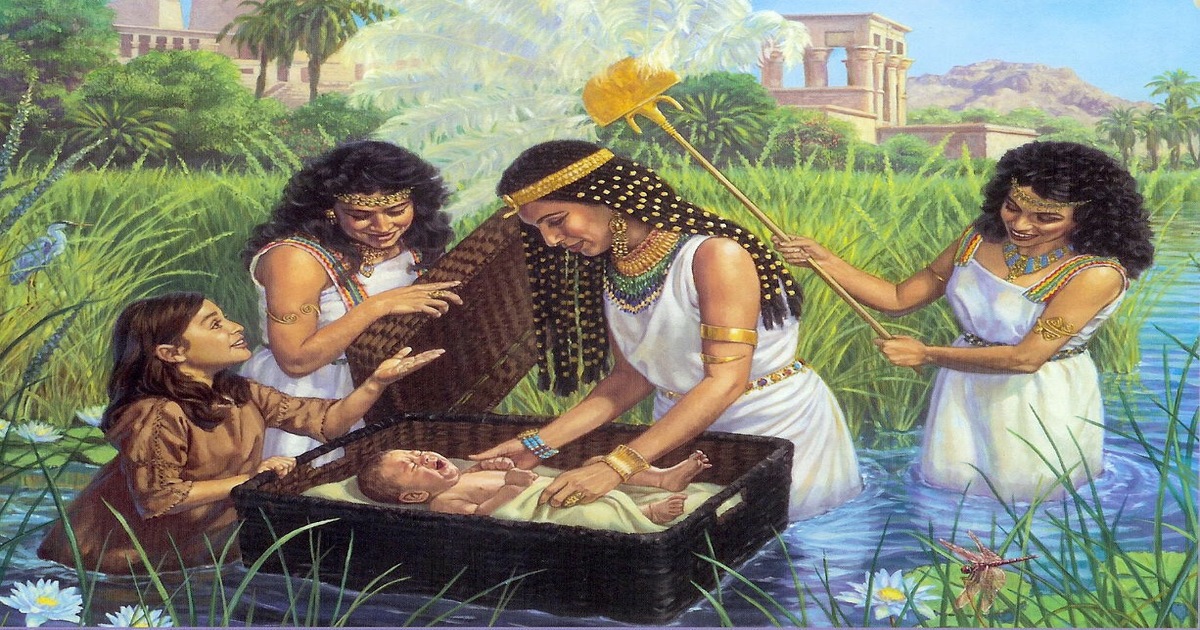
Exodus 2:3: But when she could hide him no longer, she got a papyrus basket for him and coated it with tar and pitch. Then she placed the child in it and put it among the reeds along the bank of the Nile.

Extraordinary steps in excruciating times.
In the years following Joseph’s death, Israel resided in Egypt under Pharaoh’s rule. Pharaoh issued a decree ordering the killing of all male Hebrew infants under the age of two to curb the growth of the Israelite population. In this oppressive environment, Amram and Jochebed, a devout couple, anticipated the birth of their third child. When Pharaoh’s command to the midwives to kill Hebrew boys was disobeyed, he mandated that all Hebrew male infants be thrown into the River Nile.

By faith, not fate
Hebrews 11:23- By faith Moses, when he was born, was hidden for three months by his parents, because they saw that the child was beautiful, and they were not afraid of the king’s edict.
Moses’ parents noticed that their child was special and believed in God’s purpose for him. They chose to hide him for three months, taking a courageous stand for their faith in God. They did not rely on fate or check the daily horoscope to ensure the safety of their baby.

Preparing for a Miracle
Moses’ mother Jochebed did not have a smartphone to search for a solution for their crisis. But she had one thing: the word of God hidden in her heart.
There are few important lessons we can learn from Jochebed:

  • Remember past miracles: The Hebrew word for the basket she made is tēḇâ (tay-baw) which means “ark”. The only other place this word is used is in reference to Noah’s ark. She believed that just as God had a plan for Noah’s life and rescued him from the flood, He could also save her family from Pharaoh’s oppression. In this corrupt time, as lawlessness threatens our children, let’s reflect on God’s past deeds and find hope.
  • Remember to prepare: Jochebed coated the basket with tar and pitch, showing her faith combined with practical preparation for the miracle. Despite limited resources, she did her best! The tar and pitch symbolize reliance on the Word of God and prayer. In a world full of dangers, like crocodiles waiting to devour us, let’s remember to carefully prepare our own baskets.
  • Remember to rest: After taking every possible step, she placed her baby in a basket and entrusted him to God, and waited for the miracle. Jochebed didn’t anxiously pursue the basket using the latest GPS trackers. Rather she used the other GPS (God’s Protection System) that has sustained her all through her life. She even posted Miriam to be ready to approach Pharaoh’s daughter at the right time.

Extraordinary reward for extraordinary faith
In his divine plan, God orchestrated a reward for Jochebed that no one had ever seen before or even after this incident. Jochebed became the only mother in whole world, who was paid from the king’s palace, to nurse her own child! What a beautiful Mother’s Day gift for this godly mother!

Rewards multiplied
Not only did Jochebed get paid to take care of her child, she also got the opportunity to instill godly values in him as a little child. This paid off in a greater measure when Moses became older.
Hebrews 11:24-25 says “By faith Moses, when he was grown up, refused to be called the son of Pharaoh’s daughter, choosing rather to be mistreated with the people of God than to enjoy the fleeting pleasures of sin.”
The Bible tells us in Proverbs 22 that if we train up a child in the way he should go, when he is old he will not depart from it.

Life Application
Jochebed’s life is a powerful example of trusting God through trials. Despite the heart-wrenching act of placing her precious three-month-old baby in a basket in River Nile, she surrendered her fears to God, knowing He would take care of what she couldn’t handle. Her story demonstrates how God rewards those who wholeheartedly commit to Him. If you’re feeling overwhelmed by the pressures of this world and are tempted to give up, take courage from Jochebed’s faith. Remember, God is always in control of our lives. So take heart in His unending love and protection—you are never alone.

Spanish version: https://dewdropsofmanna.com/spanish-pages-list/el-momento-milagroso-de-mama/
Hindi version: bit.ly/44Db2Bh