Broom Tree Inn

Have you ever achieved that long awaited goal—graduated from college, scored that promotion, bought your dream house, or celebrated a major victory—only to wake up next day feeling empty or exhausted? One moment you’re celebrating, and the next you’re wondering why your heart feels heavy. Elijah, one of the greatest prophets, walked through something very similar.

1 Kings 19:3-7 – Elijah was afraid and ran for his life. When he came to Beersheba …while he himself went a day’s journey into the wilderness. He came to a broom bush, sat down under it, and prayed that he might die. “I have had enough, Lord,” he said. “Take my life; I am no better than my ancestors.” Then he lay down under the bush and fell asleep.

[Note: King James Version says “juniper tree,” but the Hebrew “rotem” is actually a small desert broom tree, the only shrub giving shade in Israel’s wilderness. New King James Version refers to it as broom tree].

Depressing News

Elijah had just celebrated a huge victory on Mount Carmel. He watched God send fire from heaven. Most of us would call this moment unforgettable. But when he got home, there was a letter in the mailbox – a death sentence from Queen Jezebel. Elijah knew that she had the power and the resources to end his life. He was afraid, desperate, and feeling hopeless. He fled south to the desert of Beersheba, about 80–100 miles away.

Dry Broom Tree Inn

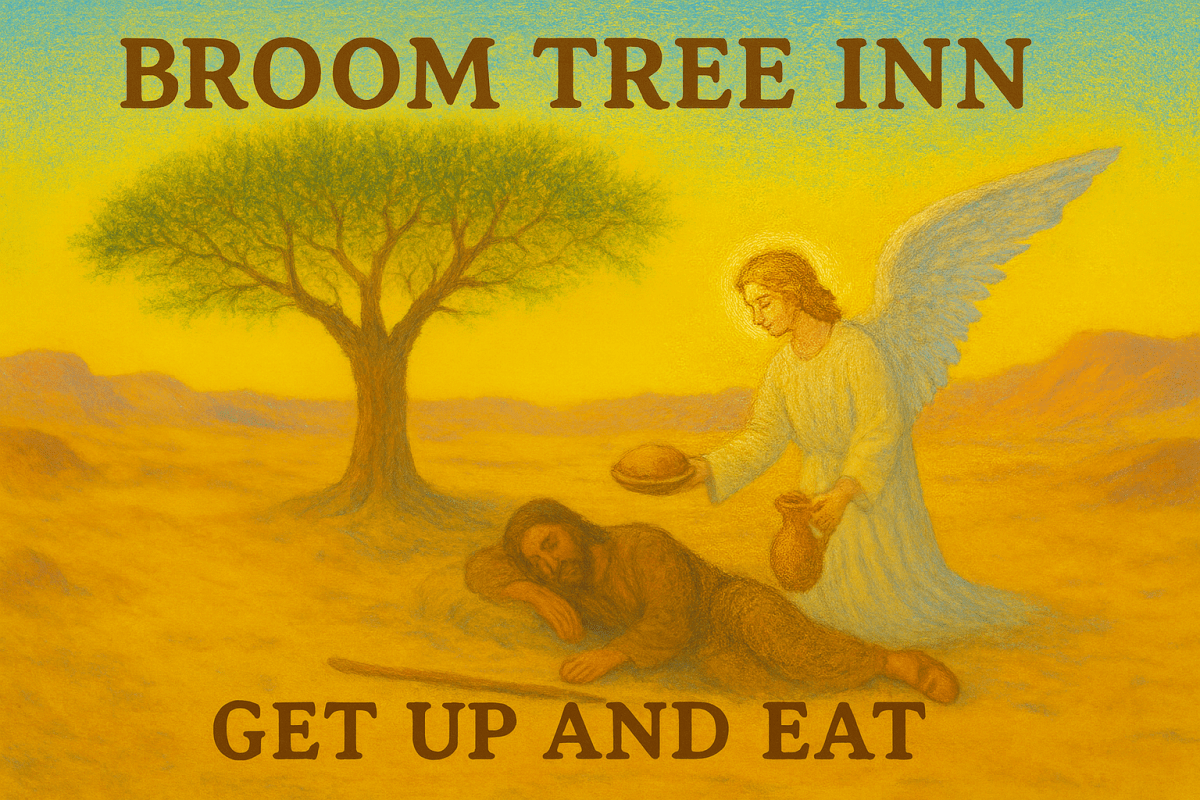
Exhausted and afraid, Elijah collapses under a broom tree. This is a small desert shrub. It’s not impressive and majestic like the cedars of Lebanon or the tall oak trees. It was a simple and often ignored little shrub. But it provided a little shade, and rest for the weary Elijah. In our world, “Broom Tree Inn” would get zero stars on a Google Review. It wasn’t a comfortable place, it didn’t have even the basic necessities. All it had was a little shade. But the broom tree has something other trees don’t: survival skills. Arborists (plant study experts) say that it survives because it develops deep root systems to tap into underground water sources.

God often meets us in small, quiet ways before great breakthroughs. Perhaps from the most unexpected places, you received a comforting word, song, or scripture that revives your spirit. Or a friend or family member who sends you a text with a verse that encouraged them. Don’t discount these as insignificant occurrences while you face tough situations in life. Perhaps those are the unexpected “broom trees” that God has provided for you to take a breath, and reflect back on the situations of life.

Depression to Divine Intervention

At his lowest, Elijah asked God to let him die. But God didn’t scold him. Instead, He sent an angel with breakfast at the Broom Tree Inn and simply said, “Get up and eat.” That moment shows God’s heart—He cares for our basic needs before calling us to anything big. Elijah was so drained that he ate and went right back to sleep. The angel returned again, reminding us how patient God is and how deeply He understands the exhausted and the overwhelmed.

Depression and desperation are hard to explain to anyone who hasn’t walked through them. They make you feel alone, rejected, and painfully lost. The enemy uses those moments to drag you into darker places and push you toward hopelessness. Elijah—who was destined to never taste death—was so crushed that he begged for it. That’s what depression can do.

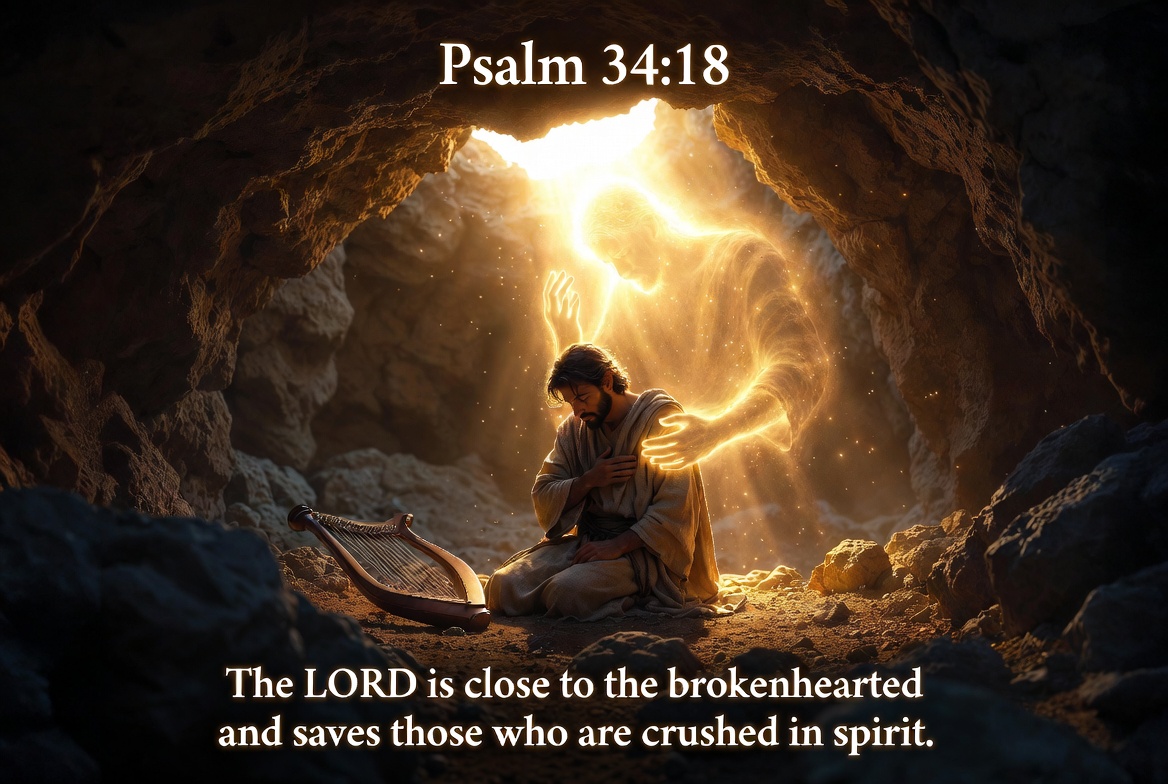
But Psalms 34 says the Lord stays close to the brokenhearted and saves those crushed in spirit. The Holy Spirit who hovered over the empty, dark earth in creation is still near you today. He’s not just hovering—He’s right beside you, holding your hands, steadying you, comforting you.

The bread and water Elijah received weren’t just food. They pointed to Jesus, the Bread of Life and the source of Living Water (John 6:35; John 4:14). And just like the angel spoke to Elijah, Jesus still whispers to every weary soul today: Get up. Be nourished. Keep going—your journey isn’t over.

Destiny Emerging from Despair

After that simple meal under the broom tree, Elijah found the strength to walk 40 days to Mount Horeb. This was the very place where Moses once met God. It was also where Israel’s story was shaped. We would think that Elijah was wandering aimlessly. But instead it was God leading him, step by step, back to the place where divine purpose was revealed.

Elijah thought he had failed. He thought his story was over. But God was quietly positioning him for what came next. He would anoint a new king. Jehu was appointed for specific tasks. Elisha was called to continue the ministry. It seemed like rock bottom. In reality, it was the sculpturing process. The Master was creating something beautiful from a rock.

Divine works in Deserts

The desert is more than an empty, dry land. In Hebrew,”midbar” shares a root with “dabar”, meaning “to speak.” Oftentimes, when we are ripped out of our comfort zone, we are thrown into a seemingly hopeless place. We don’t understand that this place can also become where God speaks most clearly.

Moses was called into leadership in a desert.
Jacob wrestled with God in the night wilderness.
Hagar heard God in the desert of despair.
Philip met the Ethiopian eunuch in a deserted land.

The desert isn’t a sign that God has turned His back on you. I’ve learned that God often chooses these unlikely places to teach and meet with you. He speaks with you in ways you couldn’t hear anywhere else.

Life Application

Maybe you’re reading this right in the middle of your own “Broom Tree Inn” season. The days seem long and heavy. It could be a diagnosis you never imagined that keeps echoing in your mind. Or the job you counted on suddenly disappears. Or grief quietly sits in the corners of your home because someone you love is no longer there. Or when the hurtful words and actions of others make you feel small and unseen.

If that’s where you are, take heart. James 5:17 reminds us that Elijah was a man just like us. One of Scripture’s greatest prophets—yet the Bible doesn’t hide his exhaustion, fear, or desert moments. Elijah had his broom tree season too. But everything changed when he heard God’s gentle whisper. And remember this: we only whisper when we’re close. God wasn’t distant in Elijah’s despair—He was right beside him.

As our own family walks through our season of grief, we can honestly say: the Lord stays close to the brokenhearted. His steady presence lifts us. It carries us and gives us the strength to keep serving Him with renewed courage each day.

So, take heart. You are not forgotten. You are not lost. You are exactly where God is able to meet you. And like Elijah, you will rise again—not in your strength, but in His.

Leave a comment

Spanish version: https://dewdropsofmanna.com/spanish-pages-list/posada-del-arbol-de-la-escoba/

Listen to blog on Spotify:


Walking in Valley of Baca

Traveling for business or vacation has become more hectic, with flight cancellations, poor hotel rooms, and unexpected events like hurricanes often disrupting plans. The Bible likens our life to a journey, filled with both joyful moments and times of uncertainty. Psalm 84 offers a powerful outline of this life journey.

Psalm 84:5-7: Blessed are those whose strength is in you, in whose heart are the highways to Zion. As they go through the Valley of Baca, they make it a place of springs; the early rain also covers it with pools. They go from strength to strength; each one appears before God in Zion.

Psalm 84 is classified as a pilgrimage psalm, sung as praise by those who traveled to Jerusalem to worship.

Meaning of Baca
The Valley of Baca, derived from the Hebrew word “bakah,” meaning weeping, is often referred to as the Valley of Weeping. Pilgrims are said to pass through this valley on their journey, though scholars debate whether it’s a real location or a metaphor for a difficult phase in life. Regardless, they agree that Baca represents a challenging experience.

Strength before Baca.
Psalm 84:5 begins with, “Blessed are those whose strength is in you,” highlighting that before pilgrims reach the valley of Baca, they are strengthened by the Lord. This verse emphasizes that we are not meant to journey alone; God offers us a reliable source of strength, but we must choose to rely on it.

Passing Through Baca
Traversing this treacherous valley means enduring harsh, arid conditions that can leave travelers extremely thirsty. Some of the characteristics of Baca:

  • Dry land: Baca is a place of extreme, and sometimes extended periods of dryness. There will be times you feel hopeless like Hagar felt (Genesis 16).
  • Deserted land: Baca is also a deserted place where you feel there is no one to help. Walking on roads marked with rocks of uncertainty is certainly painful.
  • Distorted land: In Baca, it can feel like everything you’ve known and believed, and even your faith in God, becomes distorted and distant. Trying to navigate your way through this land may seem futile at times.

Baca to Berakah
The Psalmist reminds us that when we trust God, the Valley of Baca can transform into the Valley of Berakah, a place of blessings. Even in dry times, they discovered pools of water, and as they waited for relief, God’s power came through, bringing refreshing rain to their parched land.

Strength to Strength
Travel can often leave us weary—kids exhausted, adults drained, and spirits low by the time we collect our luggage. But in this journey, something extraordinary happens. The traveler who trusts in God doesn’t just endure; he rises above it all, feeling more rejuvenated and full of vigor than ever.

End of Journey
Verse 7 reassures us that everyone will reach their destiny: Zion. Despite the dryness of the desert, the scorching heat, and the long, desperate days waiting for rain, nothing could stop the travelers from arriving at their destination.

Personal story
This blog article is written from the depths of the worst Valley of Baca my family and I have ever experienced. On June 4, 2024, our beloved 16-year-old daughter, Hannah, was called to her eternal home. Her sudden passing plunged us into a deep valley of weeping. Hannah was not just a proofreader, translation assistant, and audio reviewer for this blog ministry—she was our greatest encourager. Her absence is deeply felt in our daily lives and in all the ministries we are part of.

Walking through this valley has been incredibly difficult, yet the Bible reminds us that God is close to the brokenhearted. In this valley, where noises of confusion and despair seem to overwhelm us, we still hear God’s gentle whispers of comfort. In moments when the weight of grief feels unbearable, we sense God’s eternal hands beneath us, holding us up. As waves of sadness bring rivers of tears, we feel His presence wiping them away, renewing our strength and giving us hope. We hold tightly to the promise of His Word, knowing that we will see her again on the other shore. But in the midst of our sorrow, we are encouraged by the legacy of our daughter’s life, which continues to produce new lives committed to serving the Lord.

Life Application
One thing we’ve learned through our own grief is that everyone walks through their valleys of Baca at some point. If life has led you through seasons of deep disappointment, heartbreaking loss, or overwhelming confusion, take heart—God has promised to be with you every step of the way. Even when the enemy whispers that it’s too much to bear, remember God’s unshakable promise: He will never leave you (Hebrews 13:5). Let His promises nourish your soul, and allow His Word to strengthen your heart. The Psalmist reminds us, “O LORD of hosts, blessed is the one who trusts in you.” The same God who gave us strength before our valley, and walks with us through it now, is faithful to guide you through yours. One day, we will look back and see His faithfulness through it all. So even in grief, choose to find hope, for our God is the same yesterday, today, and forever.

Side Note:
I began writing this article before Hannah went to her eternal home. It’s taken time and God’s strength to come back and finish it. My family and I would deeply appreciate your prayers as we continue to walk through this valley of grief.

Audio version: spoti.fi/3NCh0un

Spanish version: ​https://dewdropsofmanna.com/spanish-pages-list/caminando-por-el-valle-de-baca/

Hindi version:​ ​https://bit.ly/4hh2DJI

Cast Your Cares

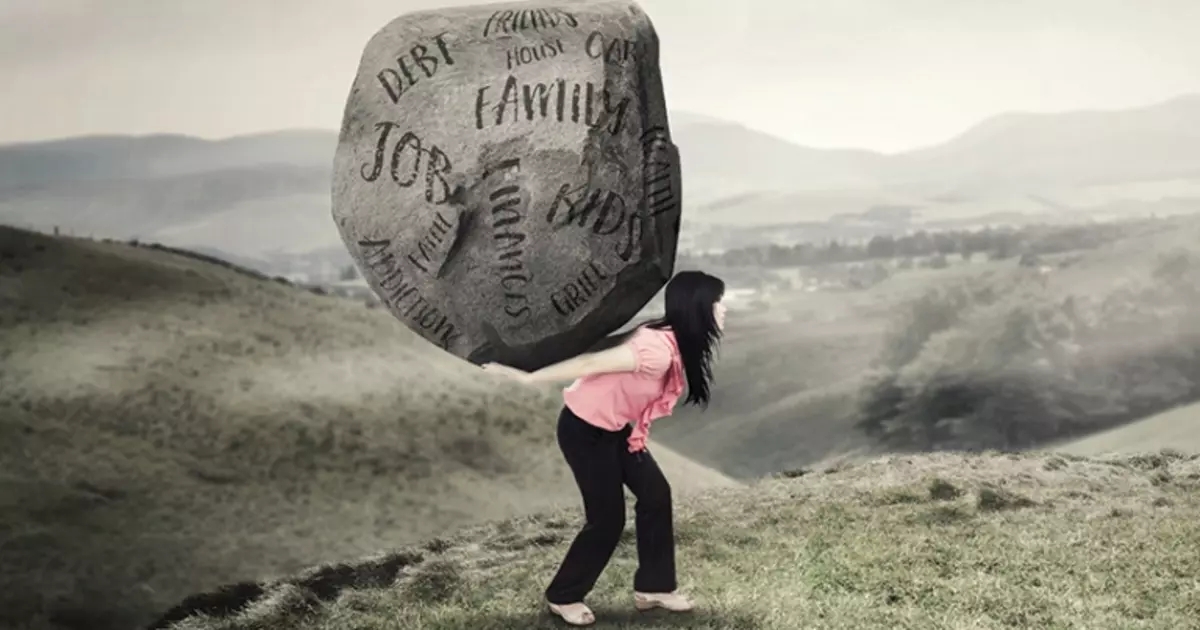
Have you ever experienced those restless nights, tangled in worries and uncertainties? Perhaps it is anxiety about your health, family or finances. My family and I have experienced our share of these challenges firsthand. But the Word of God gives us a solution for it: Cast it and rest.

1 Peter 5:7 – Casting all your care upon Him, for He cares for you.

Casting Your Load
The English term “casting” doesn’t quite capture the full impact of Peter’s message. In Greek, “casting” is translated as “epiripto,” derived from “epi” (meaning “on top of”) and “ripto” (to hurl, throw, or cast with force). This word conveys a powerful and forceful action, suggesting a vigorous and decisive throwing or flinging of something to be free from its burden. In our daily lives, it’s like tossing heavy luggage into the trunk of a car after carrying it a long way.

Casting to the Carer
The word for “he cares” in Greek is “melei”, which means to bestow careful thought upon, to give painful attention to, or to be earnestly interested in. Peter’s message to us is this: We have a God who gives utmost attention to the details of your anxieties, and is able and willing to help you when you unload your burdens on to Him. David tells us in Psalms 55:22 – “Cast your burden on the LORD, and He shall sustain you; He shall never permit the righteous to be moved.”

Casting With Both Hands
The imagery of this verse vividly portrays using both hands to lift a heavy burden off our shoulders. Similarly, we can use our hands of prayer and promises in God’s Word to cast our burdens.

Casting Helpers
Knowing that we are not able to bear the burdens ourselves, God has promised us helpers for our time of need:

  • Holy Spirit: When your head is spinning with the seemingly unending worries, and your heart is wounded with the taunting attacks of the enemy, there is a helper who is always by your side: the Holy Spirit of God. Romans 8:26 says: “In the same way, the Spirit helps us in our weakness. We do not know what we ought to pray for, but the Spirit himself intercedes for us through wordless groans.”
  • Jesus our High Priest: Jesus who tasted the pains and sufferings of mankind, is now glorified and sitting at the right hand of God, is our advocate in heaven. Hebrews 4:15–16 (ESV) says “For we do not have a high priest who is unable to sympathize with our weaknesses, but one who in every respect has been tempted as we are, yet without sin. Let us then with confidence draw near to the throne of grace, that we may receive mercy and find grace to help in time of need.”

Casting Example
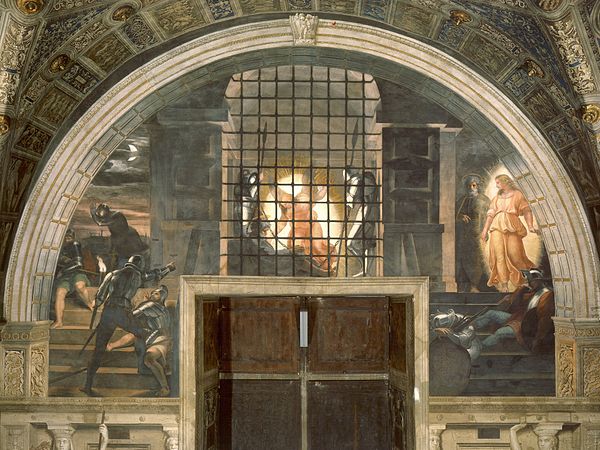
A perfect example of someone who truly trusted the Lord during his trial is Peter himself, the writer this verse! Acts 12:6 says “The night before Peter was to be placed on trial, he was asleep, fastened with two chains between two soldiers. Others stood guard at the prison gate.”
Herod had imprisoned Peter and his life was in danger but knowing that his life was secure in God’s hands, Peter slept well that night.

Life Application
Life often brings burdens that feel overwhelmingly heavy. But in the original Greek version, we’re encouraged to fling these worries and anxieties onto the Lord. Let Him carry them, for He genuinely cares about every part of our lives and our well-being. Hebrews 13:5 assures us that Jesus said, “I will never leave you nor forsake you.” When the enemy’s roar seems deafening, step forward and roar back with the voice of Jesus – the Lion of Judah ! Proclaim His promises over your pain, and you’ll find the peace of God that surpasses all understanding.

Spanish version: ​https://dewdropsofmanna.com/spanish-pages-list/echa-tus-preocupaciones/

Hindi version:​ ​https://bit.ly/3K5XmFr

Mom’s Miracle Moment

While we celebrate famous inventors like those behind electricity, telephones, cars, light bulbs, and airplanes, we are in awe of their inventions. Their names are etched into the Hall of Fame for the impact of their contributions. But the Bible introduces us to a seemingly ordinary woman, Jochebed, who invented a remarkable waterproof, crocodile-proof product.

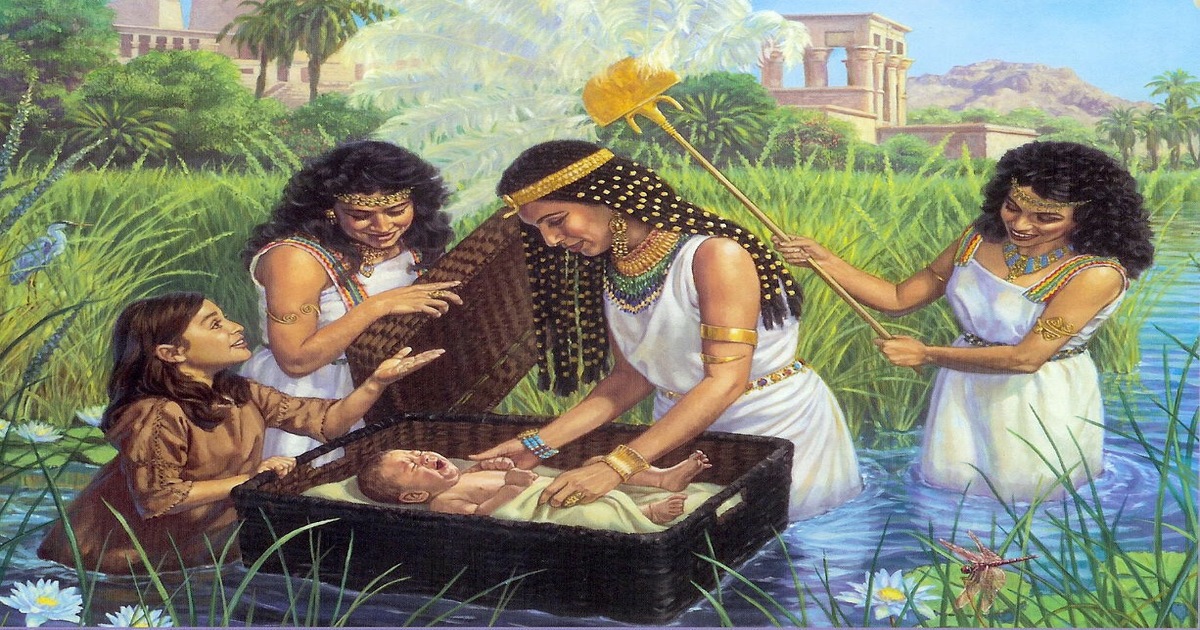
Exodus 2:3: But when she could hide him no longer, she got a papyrus basket for him and coated it with tar and pitch. Then she placed the child in it and put it among the reeds along the bank of the Nile.

Extraordinary steps in excruciating times.
In the years following Joseph’s death, Israel resided in Egypt under Pharaoh’s rule. Pharaoh issued a decree ordering the killing of all male Hebrew infants under the age of two to curb the growth of the Israelite population. In this oppressive environment, Amram and Jochebed, a devout couple, anticipated the birth of their third child. When Pharaoh’s command to the midwives to kill Hebrew boys was disobeyed, he mandated that all Hebrew male infants be thrown into the River Nile.

By faith, not fate
Hebrews 11:23- By faith Moses, when he was born, was hidden for three months by his parents, because they saw that the child was beautiful, and they were not afraid of the king’s edict.
Moses’ parents noticed that their child was special and believed in God’s purpose for him. They chose to hide him for three months, taking a courageous stand for their faith in God. They did not rely on fate or check the daily horoscope to ensure the safety of their baby.

Preparing for a Miracle
Moses’ mother Jochebed did not have a smartphone to search for a solution for their crisis. But she had one thing: the word of God hidden in her heart.
There are few important lessons we can learn from Jochebed:

  • Remember past miracles: The Hebrew word for the basket she made is tēḇâ (tay-baw) which means “ark”. The only other place this word is used is in reference to Noah’s ark. She believed that just as God had a plan for Noah’s life and rescued him from the flood, He could also save her family from Pharaoh’s oppression. In this corrupt time, as lawlessness threatens our children, let’s reflect on God’s past deeds and find hope.
  • Remember to prepare: Jochebed coated the basket with tar and pitch, showing her faith combined with practical preparation for the miracle. Despite limited resources, she did her best! The tar and pitch symbolize reliance on the Word of God and prayer. In a world full of dangers, like crocodiles waiting to devour us, let’s remember to carefully prepare our own baskets.
  • Remember to rest: After taking every possible step, she placed her baby in a basket and entrusted him to God, and waited for the miracle. Jochebed didn’t anxiously pursue the basket using the latest GPS trackers. Rather she used the other GPS (God’s Protection System) that has sustained her all through her life. She even posted Miriam to be ready to approach Pharaoh’s daughter at the right time.

Extraordinary reward for extraordinary faith
In his divine plan, God orchestrated a reward for Jochebed that no one had ever seen before or even after this incident. Jochebed became the only mother in whole world, who was paid from the king’s palace, to nurse her own child! What a beautiful Mother’s Day gift for this godly mother!

Rewards multiplied
Not only did Jochebed get paid to take care of her child, she also got the opportunity to instill godly values in him as a little child. This paid off in a greater measure when Moses became older.
Hebrews 11:24-25 says “By faith Moses, when he was grown up, refused to be called the son of Pharaoh’s daughter, choosing rather to be mistreated with the people of God than to enjoy the fleeting pleasures of sin.”
The Bible tells us in Proverbs 22 that if we train up a child in the way he should go, when he is old he will not depart from it.

Life Application
Jochebed’s life is a powerful example of trusting God through trials. Despite the heart-wrenching act of placing her precious three-month-old baby in a basket in River Nile, she surrendered her fears to God, knowing He would take care of what she couldn’t handle. Her story demonstrates how God rewards those who wholeheartedly commit to Him. If you’re feeling overwhelmed by the pressures of this world and are tempted to give up, take courage from Jochebed’s faith. Remember, God is always in control of our lives. So take heart in His unending love and protection—you are never alone.

Spanish version: https://dewdropsofmanna.com/spanish-pages-list/el-momento-milagroso-de-mama/
Hindi version: bit.ly/44Db2Bh

Tasting In Testing

Have you ever experienced a dangerous situation, where you felt the weight of danger lift off your shoulders at the last possible moment? Perhaps it was deliverance in a car accident, or maybe a medical breakthrough for your sickness. These moments of narrowly escaping disaster often leads us to thanking God for divine providence. The Bible tells us of many such events, but one person who has experienced this many times is: David.

Psalm 34:1,8 – I will praise the LORD at all times; my mouth will continually praise him. O taste and see that the LORD is good, blessed is the man who trusts in Him.

Some of the most beautiful and reassuring verses in the Bible were not
penned by men of God in peaceful settings; rather, they emerged from their
crucibles of sufferings. Psalms 34 and 56, for instance, were born out of David’s moments of extreme trouble, facing threats from all sides with no way out. The experiences described in 1 Samuel 21 provide the backdrop for these powerful psalms.


Proud Moments to Peril
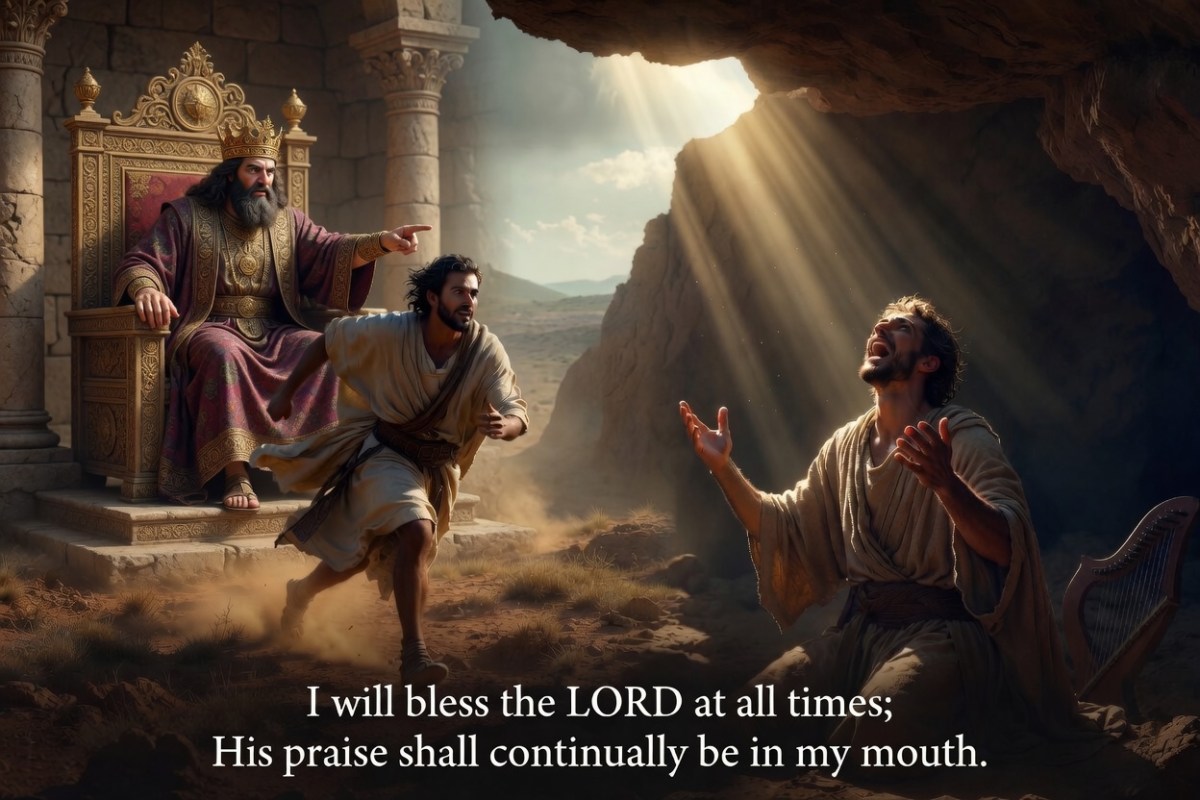
Not long before this, David had triumphed over the giant Goliath. However, his newfound fame led King Saul to pursue him relentlessly, deploying all his military and intelligence assets to capture and kill David. David found himself in danger, feeling betrayed by the very Israelites he had saved from Goliath.
In desperation David runs into the land of Gath. Gath was the hometown of Goliath. Perhaps he went there because he felt that would be one place that Saul would not come looking for him. But the people of Gath captured him and brought him to their King Achish.

Songs from David’s Soul
During this desperate and life-threatening moments, David’s soul turned to God in songs from his heart. Psalm 56 outlines the pain and his prayer: “Be merciful to me, my God, for my enemies are in hot pursuit; all day long they press their attack.”


Tasting God in the “I Scream” moments
In these perilous times, David captures the goodness of God in Psalm 34:8 with these words: “Taste and see that the Lord is good; blessed is the one who takes refuge in him.” David emphasizes that God’s goodness isn’t merely heard about, seen in others, or found online on social media—it must be experienced firsthand. Just as tasting a favorite food brings a unique satisfaction beyond words, encountering God’s goodness brings a depth of sweetness beyond description.

Despite his circumstances, David’s heart is steadfast and focused on the provision of God. God gave him a rescue plan that was unique and never again repeated in the Bible: pretend to be a madman in front of the hostile king!

The process of tasting God’s goodness isn’t like walking into an ice cream store and asking for samples. Rather these came in the “I SCREAM” moments of life. In this taste test, we may go through the most desperate, debilitating, discouraging, and downward spirals of life. When everything seems like it has hit rock-bottom, we will see the everlasting hands of Jesus our Rock of ages.

Personal story
In this first week of May, my wife and I celebrate 24 years of God’s faithfulness. Our journey is filled with stories of God turning impossibilities into blessings. After years of praying for a child and enduring pregnancy losses, we experienced the miracles of having 3 beautiful children. Through painful trials of sickness and even near-death situations, we have tasted His goodness firsthand. Our story is a testament to what only God can do.

Life Application
Amid life’s ups and downs, we experience joy, trials, and everything in between. Despite varying challenges, we find peace in knowing God orchestrates every detail. As Luke 12:7 reminds us, God’s intimate care extends even to the hairs on our heads. David closes Psalm 34 with a reassurance: “The LORD redeems the life of his servants; none of those who take refuge in him will be condemned.” So take heart and let’s boldly counter confusion with confidence, proclaiming victory through Jesus in every circumstance.

Spanish: https://dewdropsofmanna.com/spanish-pages-list/degustacion-en-pruebas/
Hindi: https://tinyurl.com/3w2uap8e

Rivers of Grace

Some moments are truly unforgettable, filling us with awe and wonder. From dazzling fireworks on Independence Day to thrilling rocket launches into space, these spectacular events inspire us with their sheer magnificence. In the Bible, we see many such events but one that stands out is: water gushing from a rock .

Numbers 20:8- Take the rod; you and your brother Aaron gather the congregation together. Speak to the rock before their eyes, and it will yield its water; thus you shall bring water for them out of the rock, and give drink to the congregation and their animals.

Wonders in Wilderness
Exodus 17:6 – Behold, I will stand before you there on the rock at Horeb, and you shall strike the rock, and water shall come out of it, and the people will drink.” And Moses did so, in the sight of the elders of Israel.

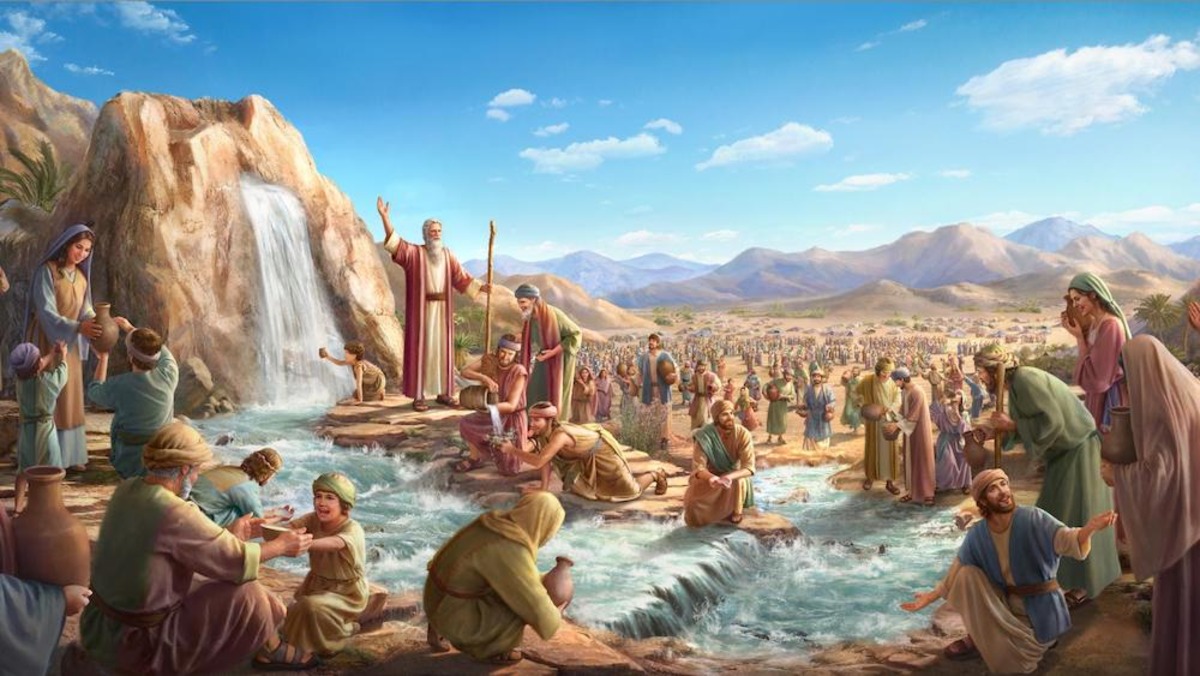
In Exodus Chapter 17, during the early stages of the Israelites’ journey, the people were thirsty and complained. Moses was instructed to strike a rock, and miraculously, water gushed forth from this dry rock in the hot desert. This remarkable event provided much-needed relief and sustenance to the thirsty travelers.

Different Generation, Same Aggravation
Later in their journey, after about 37 years, the Israelites encounter the second instance of water from a rock. Biblical scholars say that by this time most of the older generation has passed away, but the grumbling and complaining have persisted among the new generation. What one generation demonstrates, the next generation often adopts. Decades later, they are still lamenting the few pomegranates and figs they had in Egypt. An ungrateful heart can obscure our ability to appreciate God’s goodness and lead us to desire even the old, spoiled figs.

Mistakes, Miracle and Mighty Grace
Numbers 20: 10-11 And Moses and Aaron gathered the assembly together before the rock; and he said to them, “Hear now, you rebels! Must we bring water for you out of this rock?” Then Moses lifted his hand and struck the rock twice with his rod; and water came out abundantly, and the congregation and their animals drank.

In a remarkable display of divine grace, God provided water from a rock despite Moses’ disobedience. Had this miracle not occurred, the people might have stoned Moses and abandoned their journey to the Promised Land.

Punishment for disobedience
Numbers 20:12- But the Lord said to Moses and Aaron, “Because you did not trust in me enough to honor me as holy in the sight of the Israelites, you will not bring this community into the land I give them.”

When God’s grace was evident to the people, He also disciplined his faithful servant Moses for a specific error. Surprisingly, this single mistake led to Moses missing the opportunity to enter the Promised Land. Let’s explore why God administered what might seem like a severe punishment for this one misstep.

  • Disobedience – Disobedience often led to immediate punishment in those days.
  • Distrust– Moses trusted in his own past experience than the power of God to do something new.
  • Distortion – By asking “must we bring water from the rock”, Moses claimed credit for the first water miracle.

Identity of the ROCK
1 Corinthians 10:4 – and all drank the same spiritual drink. For they drank of that spiritual Rock that followed them, and that Rock was Christ.

Paul clarifies that the rock Moses struck symbolized Jesus, as Old Testament events often foreshadow those in the New Testament. In the first instance. the striking of rock and water from the rock represented the hits Jesus endured during his crucifixion. In contrast, when Moses was instructed to speak to the rock, it symbolized the grace and love we can receive from Jesus by just asking Him. There’s no need to strike Him again, as the penalty for our sins has already been paid. Here a significant foreshadowing opportunity was missed.

Solace in Grace
We can find comfort and solace knowing that all is not lost for Moses. While it is true that he did not enter the Promised Land, we see him in the New Testament on the mount of transfiguration:

Luke 9:28–31 – Now about eight days after these sayings he took with him Peter and John and James and went up on the mountain to pray….And behold, two men were talking with him, Moses and Elijah, who appeared in glory and spoke of his departure, which he was about to accomplish at Jerusalem.

God in his infinite grace and mercy does not cast away his chosen ones for their mistakes.

Life Application
Today, the unwavering promises of God and His grace remain accessible to us. In times of desperation, disappointment, illness, worry, temptation, and even in moments of spiritual struggle, turn to the Rock. His streams of healing, comfort, grace, and mercy will overflow abundantly! When the enemy tries to convince you that there is no water in this desert and that death is inevitable, point to the Rock split on the cross of Calvary and proclaim victory in the name of Jesus. You too can discover solace and grace in your hour of need.

Spanish version: https://dewdropsofmanna.com/spanish-pages-list/rios-de-gracia/
Hindi version: https://tinyurl.com/y339uv2v

Gethsemane- He Gets Us

Everyone loves beautiful gardens, and botanical gardens proudly welcome a staggering 4 million visitors each year. The sheer beauty and awe that these splendid creations evoke captivate our minds as we stroll through these landscapes. However, there’s one garden of profound importance, that surpasses them all in significance—the Garden of Gethsemane.

Mark 14:32-36 – And they went to a place called Gethsemane. And he said to his disciples, “Sit here while I pray.”… and began to be greatly distressed and troubled. And going a little farther, he fell on the ground and prayed that, if it were possible, the hour might pass from him.  And he said, Abba, Father, …Remove this cup from me. Yet not what I will, but what you will.”

Gethsemane: The Olive Oil Press
Hebrew word for Gethsemane is GatSh’manim. This comes from two words: gath, which means the press; shmanin, is the word for olives. Olive oil played a crucial role, from being used in everyday lampstands to serving in ceremonial cleansing by priests.

Farmers used sticks to knock olives from trees. The olive press involves two stones, one large atop and another beneath, effectively crushing the olives to extract oil. Alternatively, men could also press olives underfoot to obtain the desired olive oil.

This holds great significance as it symbolizes Jesus undergoing beating, crushing, and piercing for our redemption. Let’s look at some things that happened at this Garden.

Garden of Agony
Gethsemane was indeed a garden where Jesus went through deep agony. Here he was:

  • Pressed, Tempted, Surrendered. As Jesus prayed, his sweat resembled blood drops. Tempted like any other man, he implored the Father to spare him from the impending death, but submitted to the Father’s will. Mark Chapter 14 depicts this distressing moment as a moment when He was deeply troubled and He fell to the ground. Notice that the reason for this agony stemmed from the realization that, for the first time, He would be separated from the Father, and it was not an attempt to evade His mission.
  • Pressed and Punished. Equally important is the fact that the reason for his agony was that the cross was going to be the full unleashing of the wrath of God the Father, and the sin of the whole world was going to be laid upon the sinless Son of God. That includes our sins, and the sin of generations past, present and future.

Garden of Betrayal
Gethsemane showed the deepest betrayal. Jesus spent three and a half years with 12 disciples, loving and teaching them about God’s mysteries. But when He needed help, no one was there. Judas Iscariot betrayed Him, and even His trusted friends—Peter, James, and John—fell asleep instead of praying with Him.

Garden of Victory
Gethsemane is the garden where the journey to victory started. Here, the decision to obey the Father’s will, no matter the cost, was made. The completion of this process happens in another garden, the Garden Tomb, but Gethsemane marks the beginning of it all.

Life Application
As we go through the various seasons of life, let us remember what our Savior did for us. Unconditional love, sacrificial love, and love beyond measure was demonstrated in the garden of Gethsemane.

If you’ve been feeling hopeless, agonizing about what tomorrow will bring, remember that Jesus has experienced the same. Prophet Isaiah calls Jesus “a man of suffering, and familiar with pain” (Isaiah 53:3).

If you’ve ever felt betrayed by loved ones, know that you’re not alone—He has experienced it too. On the other hand, pause and consider if, inadvertently, you’ve betrayed the love of our Savior. It may not involve 30 pieces of silver, but perhaps it’s dedicating 30 hours a week to other priorities that overshadow your time with the Lord.

If you’ve been feeling unattractive, lonely, or ignored, remind yourself – He has been there as well! Prophet Isaiah says Jesus was “like a young plant, and like a root out of dry ground; he had no form or majesty that we should look at him…” (Isaiah 53:2).

Going through the pain of Gethsemane, Jesus tasted all these for us so that He can hold our hands and walk us into the garden of victory! So take heart, when the enemy tells you all is lost, point him to the Garden of Gethsemane and proclaim that victory was won! Gethsemane is where it all began.


  • Abraham Lincoln, Gandhi, Mother Teresa, Martin Luther King Jr.—names we remember not just for what they did, but for the legacy they left behind. For the most part, their lives were measured and honored after they were gone. But the Bible speaks of a man who evaluated his own life before the end came—Paul. Sitting…


  • Broom Tree Inn

    Have you ever achieved that long awaited goal—graduated from college, scored that promotion, bought your dream house, or celebrated a major victory—only to wake up next day feeling empty or exhausted? One moment you’re celebrating, and the next you’re wondering why your heart feels heavy. Elijah, one of the greatest prophets, walked through something very…


  • Kernels Eternal

    What’s the most precious or expensive thing you’ve ever had? Maybe it was something or someone you saved for, longed for, prayed for, cherished dearly when you got it, and thought you could never live without. Now imagine losing it completely—gone in a way you could never retrieve it. At first, the loss feels painful,…


  • Worrier to Warrior

    Mother Teresa, Billy Graham, and William Carey are all names etched in hearts of people for being great men and women of God. But they all had one thing in common. They all went through the dark tunnels of life where they asked the question most of us ask: “Why, God, Why?” The Bible talks…


  • Living in a world that is constantly racing towards the next chapter of success, getting the best car and living in bigger houses, we often tend to forget the victories of the yesteryears. In the Bible we see a man named Samuel who was careful to pause, reflect and celebrate what God has done in…